
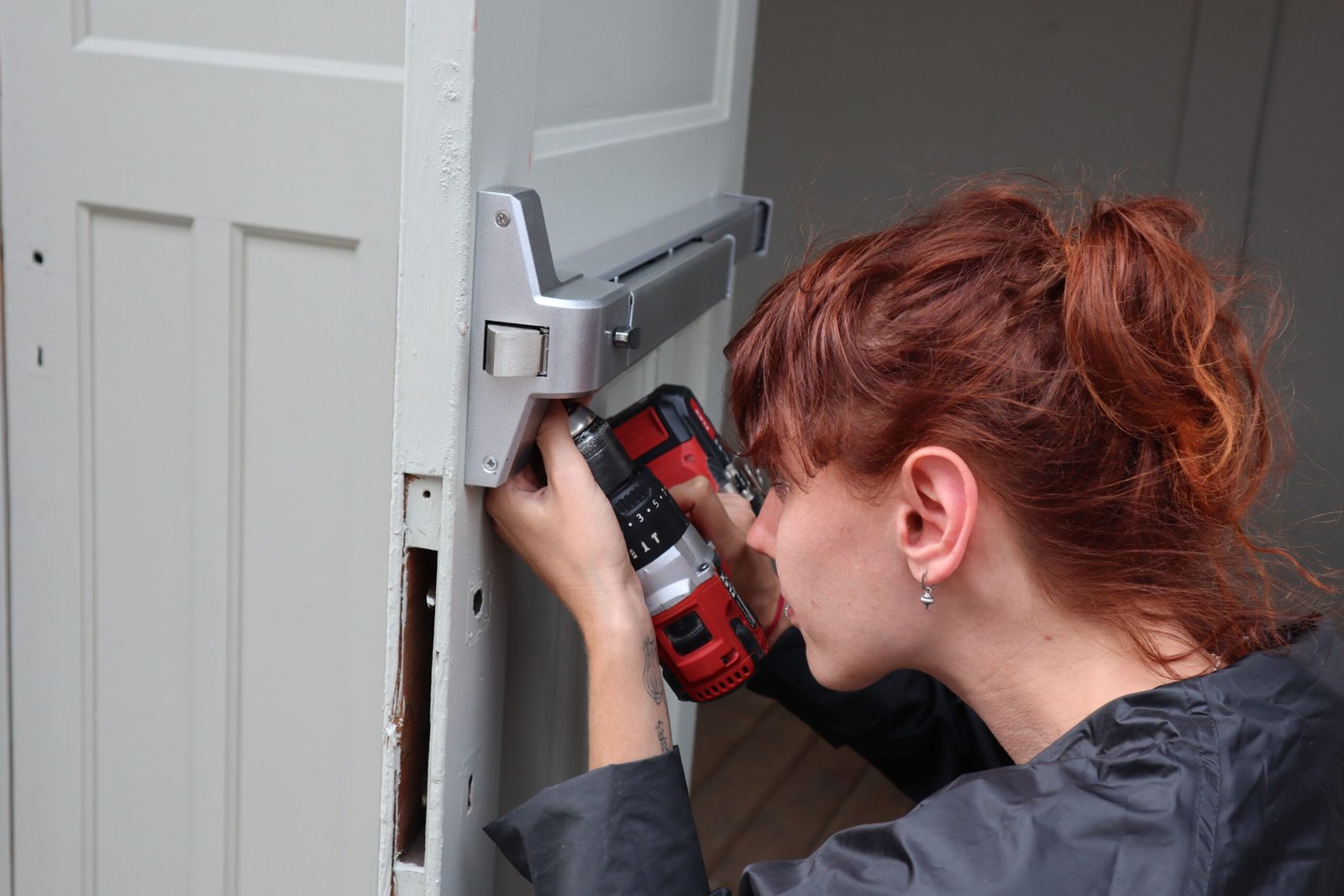
A door that bounces back open, needs a lift or a slam to catch, or simply drifts ajar is more than an annoyance. It affects privacy in a bedroom or bathroom, security on an exterior door, and even heating and cooling costs. How to Fix a Door That Won’t Latch The good news is that most latch problems are small alignment issues, and you can usually solve them with basic tools in under an hour.
This guide explains how to fix a door that won’t latch by finding the real cause first, then choosing the smallest repair that works. You will learn how to test the latch, read the contact mark, tighten and shim hinges, adjust or move the strike plate, deal with swelling and paint, and recognize when a problem is bigger than a DIY job.
Quick answer: Test the latch with the door open. If it works, mark where it meets the strike plate. How to Fix a Door That Won’t Latch A mark below the opening usually means a sagging door; a mark above usually means the door sits high or the strike is set low. How to Fix a Door That Won’t Latch Tighten the hinges first, then adjust the strike plate only if the door itself is sitting correctly.
Difficulty: Easy to moderate. Time: 10 minutes for tightening hinges, 30 to 60 minutes for moving a strike plate. Cost: Usually under $15 in parts.
Why Doors Stop Latching
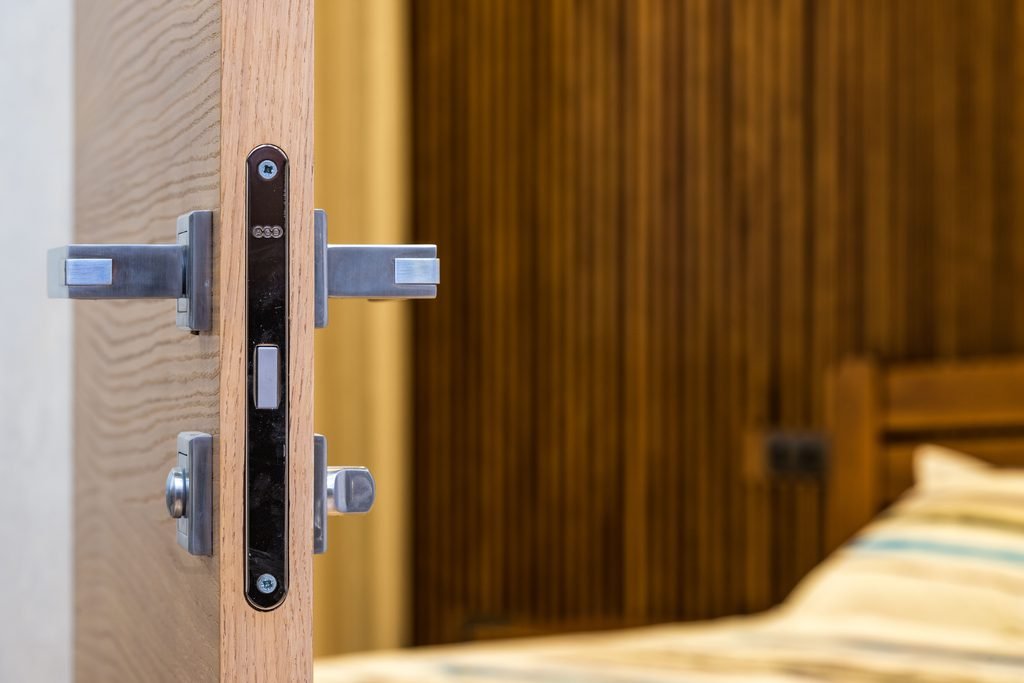
A latch works only when the spring bolt slides into the opening of the strike plate, a metal plate set into the door frame. If the bolt arrives even a few millimeters too high, too low, or too far from the frame, it hits the plate instead of entering it. How to Fix a Door That Won’t Latch The door may close but not hold.
The usual causes are:
- Loose hinge screws. Years of use pull screws out of soft wood, letting the door sag at the latch edge.
- Seasonal movement. Wood swells in humid weather and shrinks in dry weather, changing the clearance around the door.
- Paint buildup. Extra coats on the door edge, stop, or strike can add enough thickness to cause binding.
- Frame movement. Houses settle, and a shifted frame can pull the strike out of line with the latch.
- Installation errors. A strike set slightly too high or low from day one is common in new work.
- Faulty hardware. A weak spring, a sticky latch, or a loose handle can stop the bolt from extending fully.
- Compressed weatherstripping. On exterior doors, a thick or misplaced seal can push the door away from the stop.
The key point: the latch is often the symptom, not the cause. How to Fix a Door That Won’t Latch Moving the strike plate to chase a door that is sagging only hides the real problem, and the door will drift out of alignment again.
Safety Notes Before You Start
- Check for lead paint. If your home was built before 1978, painted surfaces may contain lead. How to Fix a Door That Won’t Latch Do not dry-sand or scrape old paint without following lead-safe practices, such as using a test kit, wet methods, and a proper respirator. When in doubt, have the paint tested.
- Wear eye protection when filing metal, chiseling, or drilling, and a dust mask when sanding.
- Keep a way out. Never close yourself in a room while you are troubleshooting a latch that may not retract.
- Support the door. When removing hinge screws or hinges, wedge the door with a folded towel or a pair of shims so it cannot swing or fall.
- Chisel away from your body, and clamp or hold work securely.
Tools and Materials
You may not need everything, but this list covers every repair below:
- Screwdrivers (Phillips and flat) or a drill with driver bits
- Longer wood screws, about 2½ to 3 inches, for the hinge trick
- Cardboard or thin hinge shims
- Wooden toothpicks or golf tees and wood glue
- A half-round metal file
- A sharp wood chisel (¾ inch works well) and a mallet or hammer
- Drill and small bits for pilot holes
- Fine sandpaper (120 to 150 grit) and a sanding block
- Pencil, painter’s tape, and a ruler or tape measure
- Wood filler, primer, and matching paint or stain for touch-ups
- Eye protection and a dust mask
Step 1: Test the Latch With the Door Open
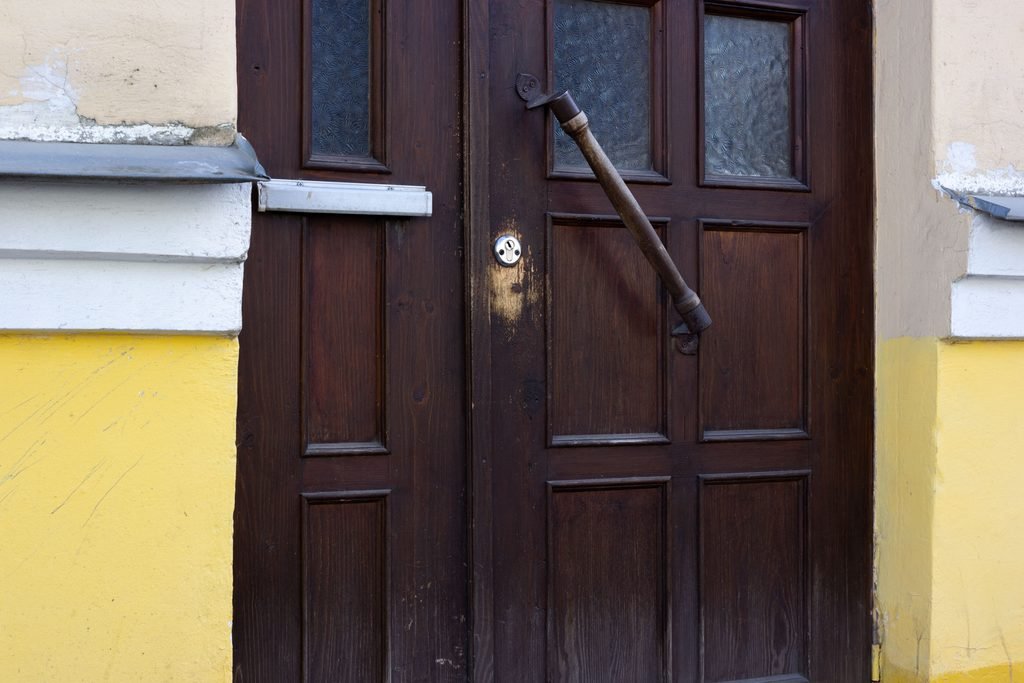
Before you touch the frame, find out whether the latch itself works. How to Fix a Door That Won’t Latch Hold the door open and turn the handle several times while watching the bolt.
- The bolt should pull back fully when you turn the handle and snap out cleanly when you release it.
- It should slide in and out with a light push on the angled face, with no sticking.
- The handle should feel firm, not wobbly or gritty.
If the latch sticks or doesn’t extend, the problem is in the hardware, not the alignment. Tighten the handle mounting screws and the two screws holding the latch plate in the door edge. How to Fix a Door That Won’t Latch A small amount of dry graphite or a silicone-based lubricant applied sparingly to the bolt can free a sticky latch. Avoid heavy oil that can attract dust. If the handle turns but the bolt stays out, or the spring is weak, replace the latch or lockset with a compatible one. Replacing hardware costs little, and many modern sets come with adjustable latches that fit standard door preparations.
If the latch works perfectly with the door open, move on.
Step 2: Diagnose Where the Latch Hits
This is the most important step, because it tells you which repair to do. Many people skip it and guess.
To see where the latch contacts the strike:
- Stick a strip of painter’s tape across the strike plate, covering the opening.
- Rub a pencil lead or a piece of colored chalk over the tip of the latch bolt. How to Fix a Door That Won’t Latch Pencil and chalk wipe off easily; lipstick or grease can stain paint and wood.
- Close the door gently, using normal pressure, then open it again.
- Look at the mark left on the tape or plate.
Now read the result:
| What you see | Likely cause |
| Mark below the opening | Door has sagged, or the strike sits too high |
| Mark above the opening | Door sits high, or the strike sits too low |
| Mark beside the opening, toward the room | Door isn’t closing fully; check rubbing, paint, or seals |
| Mark centered but door won’t hold | Bolt not fully extending, opening blocked, or wrong strike |
Two more observations help. First, look at the gap between the door and the frame all around. How to Fix a Door That Won’t Latch A wider gap at the top latch side and a tight one at the bottom hinge side points to sag. Second, notice whether you must lift, push, or pull to make the door catch. Lifting suggests sag; needing extra pressure suggests binding or seal compression.
Measure how far off the latch is, in fractions of an inch. This number decides how you fix it:
- About ⅛ inch or less: filing the strike opening is usually enough.
- More than ⅛ inch: move or reposition the strike plate, or correct the door position first.
Step 3: Tighten the Hinges and Fix Stripped Screw Holes
Hinges carry the full weight of the door, and loose ones are the single most common reason a door stops latching. Always do this step before touching the strike.
Open the door and check every hinge screw, both on the door leaf and the jamb leaf. Tighten them until snug. If a screw spins freely, the hole is stripped. Try one of these fixes:
Toothpick method (for small holes). Remove the screw. Dip three or four toothpicks or a golf tee in wood glue, push them into the hole, and snap them off flush. Let the glue dry, then drive the screw back in. How to Fix a Door That Won’t Latch The wood fibers give the threads fresh material to bite.
Longer screw method. Replace the short hinge screw with a 2½ to 3 inch wood screw. On the jamb side, a longer screw passes through the jamb and shim space and bites into the wall framing behind it. This pulls the hinge, and the door, firmly into position. Drill a pilot hole first so the screw doesn’t split the jamb, and stop driving the moment it is snug. How to Fix a Door That Won’t Latch Don’t overtighten, as that can distort the jamb. Before using a long screw, make sure there are no electrical cables or pipes in the wall nearby, and confirm that the hinge screws match the countersink of the hinge so the head sits flush.
The long-screw trick can also correct a mild sag. Driving a long screw in the top hinge on the jamb side pulls the top of the door toward the frame, which lifts the latch edge slightly. If the latch is hitting below the strike opening, this is often all the correction you need. If the latch hits above the opening, a long screw in the bottom hinge can help lower it.
After tightening, close the door and retest with the tape-and-pencil method. If the latch now enters the opening, you’re done.
Step 4: Shim the Hinges Where Needed
A hinge shim is a thin piece of cardboard or plastic placed behind a hinge leaf to change how the door sits. Shimming does not simply raise or lower the latch; it changes the door’s horizontal position and tilt.
- If the door sits too far toward the hinge side, so the latch edge never reaches the strike, shimming all hinges moves the door toward the latch side.
- If only one corner is off, shimming a single hinge tilts the door toward that corner.
- If a hinge sits too deep in its recess (called a mortise), the door can bind or hang crooked. How to Fix a Door That Won’t Latch A shim brings the leaf flush with the surrounding wood.
To shim a hinge:
- Support the door and remove the screws from the hinge leaf on the jamb side.
- Cut a piece of thin cardboard, such as from a cereal box, to the same shape as the hinge leaf. How to Fix a Door That Won’t Latch Cut screw holes in it with a utility knife or punch.
- Place the shim in the mortise behind the leaf and reinstall the screws.
- Close the door, check the gaps, and retest.
Change one hinge at a time and test after each change. How to Fix a Door That Won’t Latch If the hinge sits too tight or the door will not close after shimming, you may have overcorrected. If a hinge mortise is too shallow, the hinge may protrude and keep the door from closing; in that case, carefully chisel the mortise slightly deeper rather than sanding it. Take small passes and keep the bottom flat.

Step 5: Check for Rubbing, Paint, Swelling, and Seals
A door cannot latch if it can’t reach its closed position. Look closely along the top, sides, and bottom for shiny worn spots, scraped paint, or marks where the door touches the frame or floor.
Paint buildup. Heavy paint on the door edge or stop can add enough thickness to cause binding. How to Fix a Door That Won’t Latch Wipe the area clean, then use a sharp scraper or sandpaper to remove excess paint. Remember the lead warning above for older homes.
Swelling and seasonal movement. If the problem comes and goes with the weather, humidity is likely the cause. Wood absorbs moisture and expands in damp months. Sealing all six faces of the door, including the top and bottom edges, helps stop moisture getting in. A dehumidifier or improved ventilation can reduce swelling in bathrooms and damp rooms. How to Fix a Door That Won’t Latch Wait for the door to dry out before deciding to trim it, because wood you remove in summer may leave a gap in winter.
Sanding or planing. If a rub spot remains, mark it with a pencil, then remove the door by tapping out the hinge pins or unscrewing the hinges. Sand with 100 to 150 grit paper, moving with the grain. For deeper rubs, a hand plane removes thin layers; work from the edge inward to avoid splintering. Remove only a little at a time and test between passes. How to Fix a Door That Won’t Latch If you must remove a large amount, there is probably a bigger issue, such as a warped door or a frame that has shifted. Seal any bare wood afterward with primer and paint so it doesn’t absorb moisture.
Weatherstripping. On exterior doors, a thick or misaligned seal can hold the door away from the stop. Check that the seal is straight, undamaged, and the correct type. Reseat or replace it with the specified seal rather than cutting it away.
Step 6: Adjust the Strike Plate
Once the door hangs correctly, closes freely, and the hinges are solid, you can deal with the strike plate. How to Fix a Door That Won’t Latch Never adjust it first, or you may be compensating for a door that is out of position.
Option A: File the opening (about ⅛ inch or less)
If the latch only just misses, filing is the quickest fix.
- Remove the strike plate from the frame.
- Clamp it or hold it firmly, and wear eye protection.
- Use a half-round file, which matches the curve of the opening, to enlarge the hole in the direction the latch needs, toward the mark you found in Step 2.
- Remove filings, smooth any burrs, and reinstall the plate.
- Test the door. The latch should enter without lifting or forcing.
Don’t enlarge the opening far beyond what is needed. How to Fix a Door That Won’t Latch A larger opening can reduce how much metal the bolt contacts, and on some locksets it can interfere with a deadlocking plunger. Follow the maker’s guidance for locksets with an auxiliary plunger.
Option B: Move the strike plate (more than ⅛ inch)
If the latch is badly out of line, the plate has to move up or down.
- Measure. With the door closed, find the center of the latch and mark that height on the jamb. How to Fix a Door That Won’t Latch Transfer the mark to a position where the strike opening should sit.
- Remove the plate. Unscrew it from the frame.
- Deepen the mortise. Using a sharp chisel and mallet, carefully extend the recess in the direction you need. Hold the chisel with the bevel facing the waste, and cut in small shavings, with the grain, away from your body. How to Fix a Door That Won’t Latch Check the plate fit often.
- Fill old holes. Glue toothpicks or small dowels into the old screw holes and trim flush, so the new screws have solid wood to grip.
- Drill pilot holes. Position the plate, mark the new screw positions, and drill small pilot holes.
- Fasten the plate. Use 2½ to 3 inch screws through the plate into the framing for added security, especially on exterior doors.
- Test. Close the door and check that the latch enters smoothly with no lifting or pushing.
A note on tapping the plate sideways: the strike sits in a recess and is held in place by its screws, so it should not be nudged with a hammer. If the latch is off sideways, the right fixes are to adjust the door’s position, file the opening, or reposition the plate with a deeper mortise.
Option C: Replace the strike
A strike that is bent, worn, or the wrong type can cause trouble. Replacement strikes come in different lip lengths and shapes, so match it to your lock, and bring the old one to the store. An adjustable strike can be handy because it allows small changes without extra chiseling.
Step 7: Finish and Clean Up
Once the latch works reliably, tidy the repair.
- Fill leftover gaps and old screw holes with paintable wood filler, let it dry, and sand it smooth.
- Prime bare wood, then touch up with paint or stain that matches the frame.
- Remove all tape and marks.
- Wipe away dust and metal filings.
Final Check
Before you call the job done, run through this checklist:
- The handle retracts the latch, and the latch returns freely.
- The door swings without rubbing and reaches its closed position.
- The latch catches without lifting, slamming, or pushing hard.
- A deadbolt, if present, extends and retracts fully with the door closed.
- The door opens normally from both sides.
- Hinge and strike screws are tight.
- You’ve retested after a day or a week, since some fixes show their limits only over time.
If the problem returns, note when it happens, such as a certain season or time of day, rather than removing a little more material each time.
Special Cases
Interior doors. Most latch problems on bedroom, bathroom, and closet doors come from loose hinges or a slightly misplaced strike. Follow the steps above in order. For bathrooms, watch for swelling from steam.
Exterior doors. Treat these with extra care. A door that doesn’t latch or lock properly is a security problem. Use long screws in the strike and hinges, check the weatherstripping, and make sure the deadbolt aligns as well. If the frame is split or loose, repair it before relying on the lock.
New doors. If a new door never latched, the installation may be at fault, with hinges out of place, a frame that isn’t plumb, or a strike drilled at the wrong height. Check the instructions and adjust the hardware before cutting the door.
Doors with special hardware. Fire-rated doors, doors with multipoint locks, magnetic latches, and access-control hardware have strict requirements. How to Fix a Door That Won’t Latch Follow the manufacturer’s instructions, and avoid grinding or enlarging parts, since it can affect performance or safety.
Doors that need a handle swap. If you replace a handle, measure the backset (the distance from the edge of the door to the center of the hole), usually 2⅜ or 2¾ inches, and match it.
When to Call a Professional
Most latch problems are DIY-friendly, but call a carpenter, locksmith, or contractor if you notice:
- A split, rotted, or loose frame that won’t hold screws
- A severely warped door that won’t sit flat in the frame
- Cracks above the door or diagonal gaps in the frame, which can point to foundation or structural movement
- Repeated misalignment after you have corrected it
- An exterior door that cannot be locked securely
- A fire-rated or specialized door that needs certified work
Structural movement is not something to ignore. Early attention can prevent costly damage to walls, floors, and framing.
Common Mistakes to Avoid
- Adjusting the strike first. Always check hinges and door position before touching the plate.
- Guessing the direction. Use the pencil mark and tape test to decide, rather than trial and error.
- Removing too much material at once. You can take wood away, but you can’t put it back. Work in small steps and test often.
- Using stain-prone markers. Lipstick and grease can leave stains. Use chalk or pencil.
- Over-tightening screws. This strips holes or distorts the jamb.
- Skipping pilot holes. They prevent splitting, especially in old or dense wood.
- Forcing the door. Slamming or lifting to close stresses the hinges, handle, and latch.
- Ignoring the weather. Moisture changes make a door fit differently through the year.
- Skipping protection. Wear eye protection, and respect lead-safe practices in older homes.
Frequently Asked Questions
Why does my door latch only when I lift it?
Lifting raises the latch edge into line with the strike opening. This is a classic sign of a sagging door. Tighten the hinge screws, use a longer screw in the top hinge, and then retest.
Why does my door close but not click?
Either the bolt is missing the strike opening, or the latch is not extending. Test the latch with the door open. If it moves freely, use the pencil mark to find the alignment problem.
Can I fix a door that won’t latch without replacing it?
Usually, yes. Hinge, strike, and sanding repairs fix most cases. Replacement is only needed for a badly warped door, damaged frame, or failed hardware.
How much misalignment can I fix by filing the strike?
About ⅛ inch or less. More than that, and you should move the plate or fix the door’s position.
Why did my door stop latching after painting?
Paint adds thickness to the door edge, stop, and strike. Remove excess paint, and make sure it has fully cured. Avoid trimming the door until you’ve checked the paint.
Conclusion: How to Fix a Door That Won’t Latch
Knowing how to fix a door that won’t latch comes down to a simple habit: diagnose before you cut. How to Fix a Door That Won’t Latch Test the latch with the door open, mark where it meets the strike, and work through the repairs from least to most invasive. Tighten the hinges, shim if needed, clear any rubbing or paint, and only then file or move the strike plate. How to Fix a Door That Won’t Latch Make one change at a time and test after each.





One Comment