Minimalist home decor is often misunderstood. Many people picture bare white rooms, empty shelves and a sofa that nobody wants to sit on. In reality, a well-done minimalist home feels softer and more personal than most. It simply keeps what is useful or loved and lets everything else go.
This guide covers the principles behind the style, 20 practical ideas organized room by room, a simple plan to get started, budget advice, common mistakes and answers to the questions people ask most. Minimalist Home Decor Whether you rent a small apartment or own a large house, you can apply every idea here at your own pace.
What Is Minimalist Home Decor?
Minimalist home decor is a design approach built on intention. Minimalist Home Decor Every piece in a room should serve a purpose, bring you joy or, ideally, do both. The look rests on five ideas: open space, a restrained color palette, rich texture, clean-lined furniture and smart storage.
It is a spectrum rather than a strict rule. One person may keep ten books on a shelf, while another keeps two hundred behind closed doors. Both homes can be minimalist if the result feels calm and uncluttered. Minimalist Home Decor Related styles such as Scandinavian, Japandi and midcentury modern share many of the same ideas, so you can borrow from them freely.
The Five Principles to Remember
Before you buy or move anything, keep these principles in mind. They make every decision easier.
| Principle | What it means in practice |
| Open space | Leave generous gaps between furniture and around objects |
| Quiet palette | Choose two or three base colors and one accent |
| Texture over pattern | Create interest with materials, not busy prints |
| Clean lines | Pick simple shapes without heavy ornament |
| Hidden storage | Keep everyday items out of sight |
Living Room Ideas
1. Start With One Anchor Sofa
Choose one well-made sofa in a solid neutral and build the room around it. A sofa with slim legs lets you see the floor beneath it, which makes the room feel larger. Skip extra seating you rarely use. Minimalist Home Decor Two comfortable chairs or one ottoman are plenty for most households.
2. Limit the Coffee Table to Three Items
Surfaces stay calm when you style them with restraint. Try a stack of two books, a small bowl or tray and a single plant or branch in a vase. Groups of three feel balanced, and the open tabletop around them gives the eye somewhere to rest.
3. Hang One Large Piece of Art
Instead of a crowded gallery wall, choose a single large artwork or a tidy row of identical frames. Leave wide margins of bare wall around it. If the wall feels empty at first, give it a few weeks. Negative space is part of the design, not a mistake.
4. Layer Textures in Neutral Tones
A room painted in warm white can still feel rich when you mix linen cushions, a chunky knit throw, a wool rug and a wooden side table. Minimalist Home Decor Texture adds depth without adding clutter, so it is the best tool for keeping a minimalist living room cozy.
5. Hide the Cables and the Television
Visible cords and screens break the calm quickly. Use a cable box, wall-mounted cord covers or a low media unit with closed doors. Some people also place the television inside a cabinet. When the screen is off, the room should still look peaceful.
Kitchen Ideas
6. Clear the Countertops
Keep only the things you use every day, such as a kettle, a cutting board or a coffee machine. Minimalist Home Decor Store the toaster, blender and mixer in a cabinet. A clear counter makes cooking easier and cleaning faster, which is a practical bonus beyond the look.
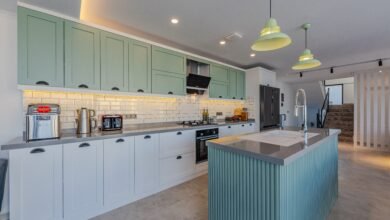
7. Choose Flat-Front Cabinets
Slab-style doors without raised panels give a kitchen its clean profile. Handleless doors or slim bar pulls keep the lines unbroken. If you are not replacing cabinets, painting existing ones in one soft color can produce a similar effect at a fraction of the cost.
8. Replace Some Upper Cabinets With Open Shelves
Removing a few upper cabinets lets light and views travel further. Minimalist Home Decor On the remaining open shelves, display only a small set of white or earthy dishes. Make sure the shelves are deep enough for plates, and keep the arrangement to a handful of pieces so it never looks crowded.
Bedroom Ideas
9. Keep the Primary Bedroom Simple
A bed, two nightstands and a lamp on each side is enough for a restful primary bedroom. Matching pairs create symmetry, which the eye reads as calm. If space allows, add one chair or bench, but resist filling every corner.
10. Choose Bedding in One Color Family
Pick linen or cotton in white, oatmeal or soft gray and layer different tones of the same family. A single throw in a deeper shade adds contrast. Fewer decorative pillows also make the bed quicker to make each morning.
11. Use Under-Bed and Closet Storage
Bedrooms collect clutter fast, so give everything a home. Flat boxes under the bed hold spare linens, and a tidy closet with matching hangers makes the whole room feel organized. Keep nightstand tops to a lamp, a book and perhaps a small dish.
Bathroom Ideas
12. Stick to a Single Material Story
Pair white walls with one natural material, such as light wood for the vanity or stone-look tile on the floor. Limiting materials keeps a small bathroom from feeling busy. Add a pair of simple sconces beside the mirror for soft, warm lighting.
13. Store Products Behind Doors
Pump bottles, toothbrushes and spare toiletries look cluttered on open counters. Keep them in a drawer or mirror cabinet and leave only a soap dispenser and a small plant or folded hand towel in view. Decanting products into matching bottles is an easy upgrade if you like the look.
Entryway, Office and Dining Ideas
14. Give the Entryway a Landing Spot
A slim console, a wall hook rail and a small basket for shoes are enough. Everything has a place, so mess never builds up at the door. A mirror above the console also bounces light into a narrow hallway.
15. Keep the Home Office to the Essentials
A desk, a supportive chair and a good lamp form the core of a minimalist workspace. Use a drawer organizer for pens and chargers, and keep papers in a closed file box. A clean desk helps focus, which is exactly why this style suits a work area.
16. Pair a Simple Table With Mixed Chairs
A plain wooden or white dining table looks elegant with matching chairs, but you can also mix two chair styles in the same color for a collected feel. Keep the center of the table clear or place a single bowl or vase there.
Whole-Home Ideas
17. Let Natural Light Do the Work
Remove heavy drapes and switch to sheer panels or simple roller shades. Place mirrors opposite windows to bounce daylight deeper into the room. A bright space needs fewer decorations because the light itself becomes part of the design.
18. Build a Warm Neutral Palette
Skip stark pure white if you want warmth. Choose warm whites, creamy beige, soft gray and pale wood, then add small touches of black in hardware or frames for definition. If you love color, pick one muted accent, such as sage green or clay, and repeat it in two or three places.
19. Bring in Greenery and Natural Materials
A single leafy plant, a bowl of fruit or a few cut stems in a clear vase brings life into a quiet room. Add wood, stone, jute, rattan or ceramic for warmth. Natural materials age well, which suits the idea of owning fewer, better things.
20. Display Only What You Love
Meaningful objects still belong in a minimalist home. Choose a few, such as a handmade bowl, a framed photograph or a favorite book, and give each space around it. If something is on display only because you have always had it, store it or let it go.
How to Start: A Simple Five-Step Plan
You do not need to transform the house in a weekend. Work through it one room at a time.
- Pick one room. Start with the space that bothers you most, usually the living room or bedroom.
- Remove everything non-essential. Take out what does not belong, then sort items into keep, donate and discard.
- Clean and look at the empty room. Notice the light, the walls and the layout before putting anything back.
- Return items with intention. Place only the useful or meaningful things back, and give each one a home.
- Live with it for two weeks. Adjust before buying anything new. Often you will find you need less than you expected.
Minimalist Home Decor on a Budget
Minimalism is about owning less, so it can actually save money. You do not need to replace your furniture to get the look.
- Declutter first. Clearing a room costs nothing and creates most of the effect.
- Repaint before replacing. A coat of warm white on walls or a tired cabinet can change a room completely.
- Buy fewer, better pieces. One sturdy sofa lasts longer than three cheap ones.
- Shop secondhand. Wooden tables, lamps and ceramics often look excellent after a clean.
- Use what you have. Rearranging furniture and grouping objects can refresh a space for free.
Buy slowly, and wait until you are sure a piece fits. Impulse purchases are the usual source of clutter.
Common Mistakes to Avoid
Going too bare. An empty room is not the same as a minimalist one. Keep soft furnishings, art and plants so the space still feels like home.
Using only cool colors. All-white and gray rooms can feel cold. Add warm woods, cream tones and natural fabrics.
Ignoring storage. If everything has nowhere to go, clutter returns. Plan closed storage before you decorate.
Forgetting comfort. A beautiful chair nobody wants to sit in does not belong. Comfort always comes before looks.
Following trends blindly. Choose pieces you will still like in five years rather than whatever is popular this season.
Frequently Asked Questions
What are the key elements of minimalist home decor?
The key elements are open space, a neutral palette with one accent, plenty of texture, simple furniture with clean lines and closed storage that hides everyday items. Together they create a calm, uncluttered home.
What colors work best for minimalist home decor?
Warm whites, beige, soft gray and pale wood are the classic base. Charcoal, taupe and black work well as small accents. You can also use muted colors such as sage or clay, as long as you keep the palette limited.
How do I make a minimalist home feel warm instead of cold?
Use texture and natural materials. Linen, wool, wood, jute and ceramics add depth to pale colors. Warm lighting, such as lamps with soft bulbs, also makes a big difference in the evening.
Can a minimalist home have patterns?
Yes, in small amounts. A striped rug, a checked cushion or a subtle geometric print is fine. Keep to one or two patterned pieces per room and avoid busy designs.
Is minimalist home decor expensive?
Not necessarily. Decluttering and repainting cost very little, and buying fewer pieces keeps spending down. Invest in a few durable items and fill the rest gradually.
Final Thoughts
Minimalist home decor is not about living with less for the sake of it. It is about creating space for the things and people that matter. Begin with one room, keep what is useful or loved, add warmth through texture and light, and let the rest go. Over time, your home will feel calmer, easier to clean and far more like you.