A stone fireplace is the focal point of many living rooms, but after a few seasons of fires it can look tired. Smoke leaves grey haze across the surround, soot creeps into the crevices, and the hearth collects scuffs, ash, and grease marks. The good news is that most of this can be removed at home with the right approach.
The catch is that the right approach depends on the stone. A cleaner that works beautifully on granite can permanently dull limestone. This guide explains how to clean a stone fireplace safely, including soot, smoke stains, paint, and burn marks, with specific advice for limestone, sandstone, slate, marble, granite, fieldstone, and faux stone.
Before You Start: Identify Your Stone
The most important step in how to clean a stone fireplace is knowing what you are cleaning. Stones fall into two broad groups.
Acid-sensitive (calcareous) stones contain calcium carbonate, which reacts with acids. How to Clean a Stone Fireplace This group includes limestone, marble, travertine, and some sandstones. Vinegar, lemon juice, and acidic cleaners can etch these stones, leaving permanent dull patches.
Acid-tolerant stones are mostly made of silica and similar minerals. This group includes granite, slate, quartzite, and most fieldstone and river rock. They handle mild cleaners better, but they can still be stained, scratched, or dulled by harsh products.
If you are unsure, check any paperwork from the installer, look up the stone name, or try this simple test in a hidden spot: place a drop of white vinegar on the surface and wait a few minutes. If it fizzes or leaves a dull mark, the stone is acid-sensitive. Rinse immediately and avoid all acidic products.
Also check whether your fireplace is natural stone or faux stone. How to Clean a Stone Fireplace A cast stone fireplace or composite stone fireplace is made from concrete or resin mixes and needs gentler, non-abrasive cleaning.
Safety First When Cleaning a Stone Fireplace
Soot and ash contain fine particles you should not breathe in, and burned residue can hide hot embers.
- Let the fireplace cool for at least 12 hours after the last fire, and longer if you are unsure.
- Wear gloves, a dust mask, and eye protection. Soot stains skin and clothing, and some cleaners irritate.
- Ventilate the room. Open windows when using any cleaning product.
- Protect your floor and furniture with drop cloths and a tarp.
- Store ashes safely. Scoop them into a metal container with a tight lid, soak with cold water, and keep it outside, away from anything flammable.
- Never mix cleaning products. Bleach combined with ammonia or acids can release toxic fumes.
- Test every product on a small, hidden area first, and wait for it to dry before judging the result.
Cleaning the stone is also a good time to think about the chimney itself. How to Clean a Stone Fireplace Creosote buildup in the flue is a fire hazard, and most safety organisations recommend an annual chimney inspection by a qualified sweep if you burn wood. Surface cleaning of the stone does not replace this.
Tools and Supplies You Will Need
You do not need many specialised products. Gather these basics:
- Vacuum with a soft brush attachment
- Soft-bristle brush and a stiff nylon scrub brush
- Microfiber cloths and clean sponges
- Bucket and clean warm water
- pH-neutral stone cleaner or mild dish soap
- Baking soda
- Dry chemical (soot) sponge
- Spray bottle
- Plastic scraper (for dried residue)
- Optional: poultice powder, stone-safe paint stripper, breathable stone sealer
Avoid wire brushes, steel wool, and abrasive scouring pads on soft stones. They scratch and can leave metal particles that rust.
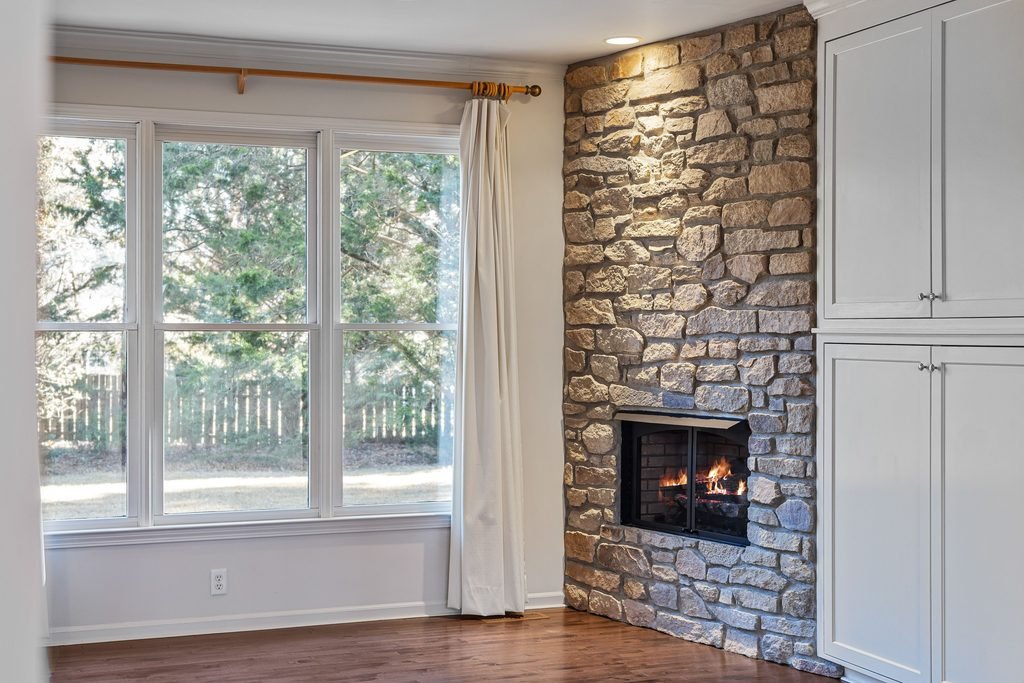
How to Clean a Stone Fireplace Step by Step
This routine works as a starting point for most stone fireplaces. How to Clean a Stone Fireplace Adjust it using the stone-specific sections further down.
Step 1: Remove ashes and loose debris
Scoop out cold ashes from the firebox and dispose of them safely. How to Clean a Stone Fireplace Then vacuum the hearth, mantel, and surround using a brush attachment, working from the top down so dust falls onto surfaces you have not cleaned yet.
Step 2: Dry-clean the soot first
This is the step most people skip. Soot is oily and spreads easily when wet, so wetting it first can push it deeper into the pores of the stone. Use a dry chemical sponge (also called a soot sponge) to wipe the surface in light, even strokes. Do not press hard. Turn or cut the sponge as it blackens.
A soft dry brush also works on rough stone, followed by another pass with the vacuum.
Step 3: Wash with a mild cleaner
Mix a few drops of mild dish soap in warm water, or use a pH-neutral stone cleaner according to the label. Work in small sections from the bottom up, so dirty runs do not streak clean stone. Scrub gently with a soft brush or sponge. How to Clean a Stone Fireplace For deep crevices on rough stone, a nylon brush is usually safe.
Step 4: Rinse and dry
Wipe away soap residue with a cloth dampened in clean water, then dry with a microfiber cloth. How to Clean a Stone Fireplace Leftover soap attracts dirt and leaves a film. Do not soak the stone, especially a porous one.
Step 5: Treat stubborn stains
If marks remain, move on to a baking soda paste or a poultice (see the sections below).
Step 6: Let it dry fully
Allow the stone to dry completely before lighting a fire or applying any sealer. How to Clean a Stone Fireplace This can take 24 hours or more for porous stone.
How to Clean Soot Off a Stone Fireplace
Soot is the most common complaint, and the keyword searches say it all: how to clean soot off stone fireplace, how to clean black soot off stone fireplace, how to clean a sooty stone fireplace. How to Clean a Stone Fireplace The method is the same, but the order matters.
- Vacuum loose soot with a soft brush attachment. Do not use a regular household vacuum for large amounts of fine soot, as it can blow it back into the room. A vacuum with a good filter is better.
- Wipe with a dry chemical sponge. This lifts soot without spreading it.
- Apply a baking soda paste. Mix baking soda with a little water to make a thick paste. Spread it over the stained area, leave for 15 to 20 minutes, then scrub gently with a soft brush and wipe clean.
- Wash with mild soap and water. This removes the oily film left behind.
- Repeat if needed. Heavy soot may need two or three rounds. Avoid scrubbing harder, since patience protects the stone.
For rough, textured stone such as fieldstone, a stiff nylon brush helps reach crevices. How to Clean a Stone Fireplace Use a flashlight to check that no soot remains in the joints between stones.
How to Clean Smoke Stains Off a Stone Fireplace
Smoke stains differ from soot. How to Clean a Stone Fireplace They look like a yellow, brown, or grey haze that has soaked into the surface above the opening. This is common on lighter stones and on a white stone fireplace.
- Start with the soot method above to remove surface residue.
- For acid-tolerant stone, a commercial fireplace or masonry cleaner made for smoke stains can help. Follow the label and rinse thoroughly.
- For acid-sensitive stone, use a pH-neutral cleaner and a poultice (see below) rather than a stronger product.
- For mild smoke staining on any stone, repeated gentle cleaning is safer than one aggressive treatment.
If smoke keeps staining the surround after cleaning, the fireplace may not be drawing well. How to Clean a Stone Fireplace A chimney sweep can check for blockages, a cold flue, or damp wood being burned, all of which increase smoke and soot.
Which Cleaner for Which Stone? Quick Reference Table
| Stone Type | Safe Cleaner | Avoid | Notes |
| Limestone | pH-neutral stone cleaner, mild soap | Vinegar, lemon, acidic cleaners | Etches easily; test first |
| Marble | pH-neutral cleaner, mild soap | Vinegar, acids, abrasives | Dulls and stains quickly |
| Sandstone | Mild soap, soft brush | Heavy scrubbing, acid, high pressure | Porous and soft |
| Slate | Mild soap, damp cloth | Harsh acids, abrasive pads | Can be enhanced with a stone enhancer |
| Granite | pH-neutral cleaner, mild soap | Abrasives, acidic products | Durable but can stain if unsealed |
| Fieldstone / river rock | Soap and water, stiff nylon brush | Wire brush on soft pieces | Clean joints carefully |
| Bluestone | Mild soap, stone cleaner | Acidic cleaners, heavy scrubbing | Fairly dense but can mark |
| Cast / composite stone | Mild soap, soft cloth | Abrasives, acids, harsh solvents | Treat like concrete |
| Faux stone panels | Mild soap, damp cloth | Abrasive pads, solvents | Check the manufacturer’s advice |
How to Clean a Limestone Fireplace
People often ask, “how do I clean my limestone fireplace?” Limestone is beautiful but delicate.
- Dust first with a soft brush or vacuum.
- Use a pH-neutral cleaner or a few drops of mild soap in warm water. How to Clean a Stone Fireplace Never use vinegar, lemon, or bathroom cleaners.
- Work gently with a soft sponge, rinse with a damp cloth, and dry.
- For soot and smoke marks, use a dry chemical sponge, then a poultice if needed.
- Avoid soaking. Limestone absorbs liquid and can hold stains.
This approach also applies to how to clean a limestone fire surround, a limestone hearth, and Portuguese limestone and Portland stone fireplaces, which are all calcareous stones.
How to Clean a Marble Fireplace and Hearth
Marble is highly sensitive to acids and can show every mark. How to Clean a Stone Fireplace If you are wondering how to clean marble fireplace surrounds or a marble hearth, follow these rules.
- Use a pH-neutral cleaner made for marble, or mild soap and warm water.
- Wipe up spills immediately.
- Never use vinegar, lemon, or abrasive powders.
- For burn marks on marble, gently buff with a soft cloth first. Persistent marks usually mean the surface has etched or scorched, and a stone restoration professional can hone and repolish it.
- For micro marble fireplace surfaces, which are often a resin and marble dust mix, avoid solvents and abrasives, and stick to mild soap.
How to Clean a Sandstone Fireplace and Hearth
Sandstone is porous and relatively soft. How to Clean a Stone Fireplace If you are asking how to clean a sandstone fireplace or sandstone hearth, be careful.
- Start with dry methods: vacuum and soft dry brush.
- Use mild soap and warm water, applied with a soft brush.
- Avoid high-pressure water and heavy scrubbing, which can wear away the surface.
- Test acid-based products carefully, as some sandstones contain calcium carbonate.
- A poultice is safer than scrubbing for deep soot stains.

How to Clean a Slate Fireplace and Slate Hearth
Slate is dense and fairly durable, so it tolerates routine cleaning well.
- Dust and vacuum first.
- Wash with warm water and a small amount of mild soap using a soft cloth or mop.
- Rinse with clean water and dry to prevent water marks.
- If the slate looks faded, a slate or stone enhancer can restore depth of colour. Apply thinly and follow the label.
- For black slate around a fireplace, avoid greasy or waxy products that leave streaks.
How to Clean a Granite Fireplace or Granite Hearth
Granite is hard and heat resistant, which is why it is popular for hearths.
- Use a pH-neutral cleaner or mild soap and warm water.
- For a black granite hearth, wipe with a microfiber cloth and avoid cleaners that leave residue, How to Clean a Stone Fireplace which shows more on dark stone.
- For a rough granite fireplace, use a stiff nylon brush on textured surfaces.
- Avoid acidic products, which can dull polished granite and weaken the sealer.
How to Clean a Fieldstone, River Rock, or Rock Fireplace Wall
Rough, irregular stone traps soot in its crevices, so cleaning takes patience.
- Vacuum and brush loose soot and dust.
- Wipe with a dry chemical sponge where you can reach.
- Scrub with warm water, mild soap, and a stiff nylon brush, one section at a time.
- Use a soft cloth to rinse, and a small brush to clean mortar lines.
- For stubborn grime on acid-tolerant fieldstone, a masonry or fireplace cleaner can be used according to the label, after a patch test.
Avoid wire brushes on soft or colourful stones, as they scratch and can strip the natural colour.
How to Clean a Faux or Cast Stone Fireplace
A faux stone fireplace or cast stone fireplace surround is more forgiving in some ways and more fragile in others. How to Clean a Stone Fireplace The surface coating can be damaged by abrasion or harsh chemicals.
- Use mild soap and warm water with a soft cloth.
- Skip abrasive pads and strong solvents.
- Test any cleaner on a hidden spot.
- Check the manufacturer’s care instructions if you have them.
How to Remove Deep Stains With a Poultice
If soot, smoke, or grease has soaked into the stone, scrubbing rarely works. A poultice draws stains out of porous stone.
- Mix a absorbent powder (such as diatomaceous earth, kaolin, or a ready-made poultice powder) with a suitable liquid to form a paste about the consistency of peanut butter. How to Clean a Stone Fireplace Use water for general soot and smoke, a stone-safe solvent for oil stains, and follow product directions for the right liquid.
- Wet the stone slightly with clean water.
- Spread the paste about 1/4 inch thick over the stain, extending an inch past the edges.
- Cover with plastic wrap and tape the edges. Leave it for 24 to 48 hours.
- Remove the covering and let the paste dry fully, then scrape it away with a plastic scraper and wipe with a damp cloth.
- Repeat if needed.
Choose products designed for your type of stone, and never use acidic poultice liquids on limestone or marble.
How to Clean Paint Off a Stone Fireplace
Many older stone fireplaces have been painted over, and removing the paint is one of the most common requests.
- Test a stone-safe paint stripper designed for masonry in a hidden area first.
- Apply it according to the label, let it work, then scrape gently with a plastic scraper and brush off residue with a soft brush.
- Rinse carefully and let the stone dry.
- Heavy or multiple layers may need repeated treatments.
- Avoid sandblasting, which can damage the stone and the joints.
Paint stripping can be messy and the fumes can be strong, so ventilate well and wear proper protection. How to Clean a Stone Fireplace For valuable stone or large areas, a restoration specialist may be the safer choice.
How to Clean an Old Stone Fireplace
An old stone fireplace often has crumbling mortar, years of soot, and soft stone. Take extra care.
- Check the mortar joints first. If they crumble, repoint before wet cleaning.
- Use dry cleaning and gentle methods first.
- Avoid pressure washers and strong chemicals.
- Do not use the fireplace until any structural problems are repaired by a professional.
How to Clean a Stone Hearth
The hearth takes the most abuse: dropped logs, ash, boots, and spills.
- Sweep and vacuum regularly.
- Wipe with a damp cloth and mild cleaner suited to the stone.
- Remove ash marks quickly, before they set.
- Use a hearth rug or mat if the hearth is used often.
- Check flagstone and bluestone hearths for deep crevices where ash collects, and clean them with a soft brush.
How to Clean an Outdoor Stone Fireplace
An outdoor fireplace faces rain, algae, and leaf stains.
- Brush away debris and cobwebs.
- Wash with mild soap, water, and a soft brush.
- For green or black algae, use a cleaner made for outdoor masonry, and follow the label.
- Use a pressure washer only on a low setting and at a distance, and not on soft stones or old mortar.
- Check for cracks and gaps, since water can freeze and expand inside them.
Should You Seal a Stone Fireplace?
Sealing can make future cleaning easier, but it needs care.
- Use a breathable, penetrating stone sealer suited to your stone and location.
- Apply it only to the surround and hearth exterior, not inside the firebox.
- Make sure the stone is clean and fully dry first.
- Follow the label for curing time, and wait before lighting a fire.
- Test in a hidden spot, as sealers can darken some stones.
Not all stones need sealing, and some natural finishes are better left untreated. If you are unsure, ask a stone supplier.
Common Mistakes When Cleaning a Stone Fireplace
| Mistake | Why It Causes Problems | What to Do Instead |
| Using vinegar on limestone or marble | Acid etches the surface | Use pH-neutral cleaner |
| Wetting soot first | Spreads and drives it into pores | Dry-sponge and vacuum first |
| Using wire brushes | Scratches and leaves rust marks | Use nylon brushes |
| Soaking porous stone | Traps moisture and stains | Use damp cloths and dry well |
| Mixing cleaners | Can release dangerous fumes | Use one product at a time |
| Skipping the patch test | Risk of permanent damage | Test a hidden area first |
| Sealing the firebox | Not designed for heat and smoke | Seal only the exterior stone |
How Often Should You Clean a Stone Fireplace?
A simple schedule keeps soot from building up.
| Task | Frequency |
| Dust and vacuum surround and hearth | Weekly in burning season |
| Wipe hearth and mantel | Every 1 to 2 weeks |
| Remove ashes | After each fire cools, or as needed |
| Deep clean stone surround | Once or twice a year |
| Chimney inspection and sweep | Annually |
| Check mortar and consider resealing | Annually |

When to Call a Professional
Many jobs are fine for DIY, but call a professional if:
- The stone is valuable, antique, or heavily damaged
- You see crumbling mortar, cracks, or loose stones
- Stains do not respond to gentle cleaning or poultice treatment
- You are dealing with paint removal on a large or delicate surface
- There is heavy creosote in the chimney or flue
- You smell smoke or notice poor draft when the fireplace is in use
A chimney sweep handles the flue, and a stone restoration specialist handles etching, deep staining, and repair.
Frequently Asked Questions (FAQs)
1. What is the best way to clean a stone fireplace?
Start by vacuuming, then dry-sponge soot, then wash with mild soap or a pH-neutral stone cleaner and warm water. Rinse and dry. Use stone-specific methods for delicate stones.
2. How do I clean soot off a stone fireplace?
Vacuum loose soot, wipe with a dry chemical sponge, then use a baking soda paste and mild soap and water. Avoid wetting soot first, as it spreads.
3. Can I use vinegar to clean a stone fireplace?
Only on acid-tolerant stones such as granite or slate, and even then sparingly. Never use vinegar on limestone, marble, travertine, or other acid-sensitive stone.
4. How do I clean a limestone fireplace?
Use a soft brush, a pH-neutral cleaner or mild soap, and warm water. Rinse lightly and dry. Avoid all acids.
5. How do I clean a sandstone fireplace?
Use dry methods first, then mild soap and a soft brush. Avoid heavy scrubbing and high-pressure water, since sandstone is soft and porous.
6. How do you clean a slate hearth?
Sweep, then wash with warm water and mild soap on a soft cloth. Dry it, and use a stone enhancer if the colour looks faded.
Final Thoughts
Knowing how to clean a stone fireplace comes down to three things: know your stone, start with the gentlest method, and be patient. How to Clean a Stone Fireplace Dry-clean soot before you add water, use pH-neutral products on delicate limestone and marble, and save poultices and strippers for the stains that really need them.
Regular light maintenance beats occasional heavy scrubbing. How to Clean a Stone Fireplace A weekly dust, a seasonal deep clean, and an annual chimney check will keep your stone looking good and your fireplace safe. If the stone is valuable, the damage is structural, or the stains will not budge, a stone or chimney professional can save you from costly mistakes.