Learning how to organize a pantry is one of the fastest ways to make a kitchen easier to use. When kitchen pantry storage turns into a pile of half-open packets, forgotten cans and duplicate jars, even a quick dinner becomes frustrating. The good news is that you can organize a pantry without a renovation or a full set of matching pantry storage containers. How to Organize a Pantry A clear process, a tape measure and a few well-chosen pantry organization containers are enough.
Pantry organization is the practice of grouping food and supplies into sensible categories and giving each category a fixed home, so the pantry for your kitchen stays visible, accessible and easy to maintain. How to Organize a Pantry This guide covers every type of space, from a narrow cabinet to a pantry in a closet, with practical pantry organization tips, storage ideas and a simple routine to keep it tidy.
Step 1: Empty, Sort and Clean Your Pantry
Before you buy a single bin, find out what you already own. How to Organize a Pantry The best way to organize pantry shelves starts with an empty space, because a clean, bare shelf shows exactly where your storage is failing.
Take everything out. Clear every shelf, including baskets, containers, spice jars and non-food supplies, and place them on a counter. This shows how much food you have, which shelves are wasted and which products have been forgotten. It also reveals duplicates, such as three open bags of the same flour hidden on different shelves.
Sort into groups. Put pasta and rice together, breakfast foods in a second pile, snacks in a third and baking ingredients in a fourth. Keep non-food items apart. This is the simplest answer to how to sort a pantry, and it is also how to categorize pantry items before you decide where each group will live.
Check dates and condition. Look for damaged packaging, moisture, signs of pests and products past their labeled dates. Follow manufacturer storage instructions and food safety guidance. Do not discard good food just because you rarely cook with it.
Take stock before you shop. A quick inventory prevents unnecessary purchases. How to Organize a Pantry According to the Washington State Department of Ecology’s November 2024 Use Food Well Campaign Research Report, 79% of surveyed respondents said they often or always check their refrigerator and pantry before grocery shopping. Visible supplies make that habit easy.
Clean and inspect. Wipe the shelves and let them dry. Look for loose brackets and damaged surfaces. How to Organize a Pantry Are the top shelves hard to reach? Is there unused space under the bottom shelf? Does the door open fully? These answers help you choose the right pantry shelf organizer or pantry storage shelves before you spend any money.
Step 2: Plan a Layout That Fits Your Pantry Shelves
A good pantry set up makes everyday ingredients easy to find without wasting space. Instead of putting products wherever they fit, plan around shelf size, food categories and how often you use each item. How to Organize a Pantry The best pantry layout is the one that matches your habits.
Measure Before You Buy
Measure every shelf before buying shelves for pantry upgrades, baskets, bins or turntables. Record three numbers:
- Width: side to side.
- Depth: front edge to back wall.
- Height: clearance between shelves.
If you plan to add a door rack, measure the door space and check the hinges and frame. Leave enough room to pull a container forward, because a bin that fits perfectly may be impossible to remove.
Create Zones for Each Food Category
Zones help everyone return items to the right place. Smaller spaces can create several zones on one shelf with baskets or dividers.
- Breakfast: cereal, oats, pancake mix and spreads.
- Snacks: crackers, nuts and packaged snacks.
- Baking: flour, sugar, baking powder and similar ingredients.
- Canned goods: vegetables, beans, soups and fruit.
- Grains and pasta: rice, pasta, lentils and other dry staples.
- Cooking essentials: oils, sauces, condiments and everyday seasonings.
Adjust these zones to your household. A keen baker needs more baking space, while a rice-and-grains household may want those staples front and centre.
Keep Everyday Items Within Reach
Middle shelves suit commonly used foods, and occasional items can go higher if they are still safe to reach. Put heavy products on sturdy lower shelves. If children use the pantry, place lightweight snacks low and keep anything that needs adult supervision out of reach.
Make Deep Shelves Work
Deep shelves hide products at the back. Use pull-out bins or rotating trays, and arrange items in shallow rows instead of tall stacks. In a large pantry, organization follows the same rule: everything should be visible without moving what sits in front.
How to organize a small pantry: remove unused items, measure each shelf, group food into categories, keep everyday ingredients within reach and use bins, risers or turntables to improve visibility. Keep heavy items low and avoid filling every inch.

Smart Pantry Storage Ideas That Use Every Inch
Once the layout is planned, pick accessories that solve specific problems. How to Organize a Pantry The right organizer improves access, but too many products can create more clutter than they remove.
Shelf Risers and a Pantry Can Organizer
Shelf risers add a second level so smaller items stay visible. A pantry can organizer, whether a tiered riser or a dedicated can rack, keeps labels facing forward and stops tins disappearing at the back. How to Organize a Pantry This makes pantry can storage much easier and is a simple answer to the best way to store can goods. Check the clearance first: a tall riser in a short gap makes the upper level hard to use, and heavy products need a riser built for the weight.
Clear Bins and Kitchen Containers for Storage
Clear pantry organization containers group small packages without hiding them. Snacks, seasoning packets and baking supplies tend to spread across shelves, and bins keep each category together. How to Organize a Pantry Stackable versions use vertical space as long as they stay stable. Products such as iDesign clear storage bins are one example, so compare the dimensions with your shelf space before buying. Not every product needs decanting, because original packaging keeps cooking instructions and ingredient details.
Drawers for Pantry Cabinets and Shelves
Drawers for pantry cabinets bring the back of a shelf to you. Pantry storage drawers and pull-out units suit heavy or bulky items such as tins, bottles and bags of potatoes, and kitchen pantry drawers make a low shelf far more usable. Pantry shelves with drawers combine both options in one unit. When you organize pantry drawers, assign one category to each drawer and avoid overloading it, since a full drawer is hard to open. Check that the frame allows the drawer to extend fully.
Door-Mounted Organizers
The back of the door adds storage in a compact kitchen. Over-the-door racks hold lightweight items such as seasoning packets and small packaged foods. Check width, hinge position and clearance, close the door slowly to test it and avoid overloading the rack. Renters may prefer removable options that need no permanent changes.
Lazy Susans and Slim Baskets
A lazy Susan is a rotating tray for oils, sauces, condiments and small jars. For example, an OXO Good Grips Lazy Susan suits a deep shelf where bottles are hard to reach. Measure the height and diameter first, because an oversized tray wastes shelf space. Slim baskets fit narrow gaps and group snack bars or packets. How to Organize a Pantry They are also the easiest way to organize pantry items with baskets when you want something lighter and cheaper than fixed shelving.
How to Organize a Pantry Closet or Cabinet Pantry
A pantry in a closet has narrow shelves, limited depth and a single door. It lacks the flexibility of a walk-in, but a pantry closet organizer system built from zones, bins and clear shelf space can make it fully functional. How to Organize a Pantry The same ideas help when you organize cabinet pantry layouts or a food cupboard.
Divide Narrow Shelves Into Zones
When learning how to organize a pantry closet, give each shelf one or two small categories: breakfast on one, canned goods on another and heavy bags of rice or grains low down. Use compact, removable bins, because oversized baskets eat the width. Do not mix unrelated items just because they fit.
Use Height and the Back of the Door
Shelves for pantry closet spaces are often widely spaced, so small risers and stackable bins help use the height. Reserve higher shelves for lightweight, rarely used items and never stack unstable packages above eye level. If clearance allows, the door can hold a rack for small products.
Handle Deep Closet Shelves
Where shelves run deeper than they are wide, use clear bins as removable sections, pull-out baskets, or a rotating tray for upright bottles. Good pantry storage in a closet means shallow rows, not tall stacks that hide food.
Cabinet and Cupboard Pantries
For pantry cabinet organization, treat each shelf as a zone and use kitchen cabinet storage containers and a cabinet can organizer for tins. Pantry cupboard organization follows the same logic. In a small food cupboard, trays or tiered racks stop items disappearing. Keep everyday essentials at eye level and heavier items lower down.
How to organize a closet-style pantry: measure the shelves, divide them into small zones, use compact bins on narrow shelves and pull-outs on deep ones, add door storage if clearance allows and keep everyday ingredients near the front.
Choosing Pantry Storage Containers and Organizers
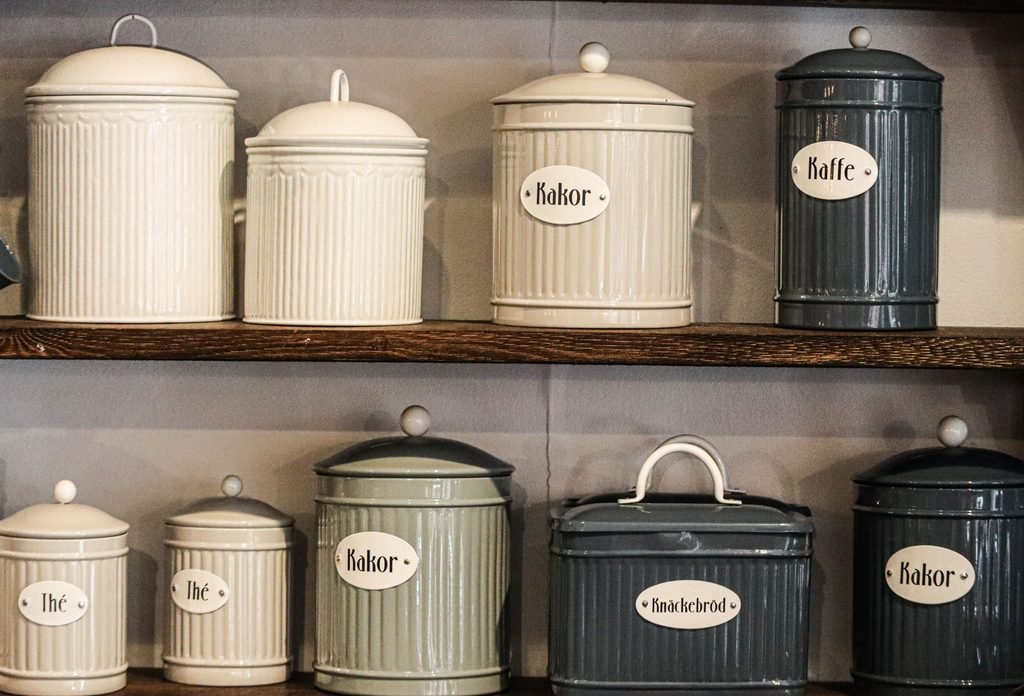
Airtight containers suit dry staples such as rice, flour, sugar and pasta. How to Organize a Pantry Good pantry dry goods storage keeps products contained and may reduce exposure to moisture when containers are used correctly. Choose food-safe containers with secure lids, make sure they are clean and dry before filling and label them with the product name and a date when useful. Rubbermaid Brilliance Food Storage Containers are one range shoppers consider. The best pantry storage containers fit your shelf, stack well and are easy to open.
Transferring everything is unnecessary. How to Organize a Pantry Original packaging preserves ingredient details, allergen information and dates, so keep the label with any opened package. Dry pantry storage should still follow each product’s recommended conditions.
A matching set of pantry storage containers or a full pantry organization set can look neat, but buy only what your layout needs. Use this table to compare the main options.
| Organizer | Best for | Key benefit | Limitation |
| Clear storage bins | Snacks and small packages | Keeps categories together and contents visible | Wastes space if poorly sized |
| Shelf risers | Cans, jars and short packages | Improves visibility on crowded shelves | Needs enough vertical clearance |
| Lazy Susans | Oils, sauces and condiments | Brings back-of-shelf items forward | Takes up a defined area |
| Pull-out baskets and drawers | Deep shelves and grouped products | Moves stored items forward | Unnecessary on shallow shelves |
| Over-the-door racks | Lightweight, small products | Uses unused door space | Needs clearance and secure fitting |
A simple solution often beats a complicated one. If a shelf already keeps products visible and accessible, it may not need another organizer.
Budget Ideas, Upkeep and Mistakes to Avoid
Budget-Friendly Pantry Ideas
Pantry organization without containers is possible. Use small baskets for snacks, sturdy household boxes for unopened packages, simple dividers on wide shelves and clean, food-safe containers you already own. How to Organize a Pantry Clean magazine holders can hold flat packages such as wraps. Even kitchen organization without pantry space works with a tall cabinet, a rolling cart or a shelf unit. Before buying anything, name the problem: if cans are hard to see, a riser may help, and if small packets scatter, a basket may be enough.
How to Keep a Pantry Organized
Knowing how to keep pantry organized matters more than the first set up. After shopping, return each item to its assigned zone instead of wherever there is space. Do a short weekly check for misplaced packages and empty containers, and review the shelves before you shop. Bring older products forward and place new ones behind, and check product condition rather than assuming shelf life. A monthly review spots duplicates and zones that need more room. How to Organize a Pantry These simple pantry tips keep easy pantry organization sustainable.
Common Mistakes to Avoid
- Buying organizers before measuring: products that do not fit waste money and shelf space.
- Overfilling containers: a bin filled to the top is hard to use and hides what remains.
- Putting everyday items out of reach: frequently used ingredients belong at easy heights.
- Decanting everything: original packaging often holds useful product information.
- Ignoring vertical space: risers and stackable storage help when clearance allows.
- Blocking the door: door racks must not touch shelves, hinges or the frame.
- Creating too many categories: an overcomplicated system is hard to maintain.
The best system is one that suits your routine and is easy for everyone in the household to follow.
Frequently Asked Questions About Pantry Organization
How do you organize a pantry with very little space?
Remove unused items, group similar foods and measure shelves before adding organizers. Use compact bins, shelf risers and vertical storage while keeping everyday ingredients within reach.
How do I organize my pantry closet?
Divide narrow shelves into categories, use removable bins for grouped products and add door storage when clearance allows. Keep frequently used items near the front.
Should I use clear containers or original packaging?
Both work. Clear containers suit dry goods, while original packaging keeps instructions and product details. Choose whichever makes storage and identification easiest.
How can I organise a pantry with deep shelves?
Use removable bins, pull-out baskets, drawers or a lazy Susan so items at the back stay visible and are not forgotten.
How can I organize a pantry without spending much?
Declutter first, reuse baskets and food-safe containers you own, group similar products and buy only the organizers that solve a specific storage problem.
Conclusion
A functional pantry begins with understanding your space and the products you need to store. Measuring shelves, creating practical food zones and keeping everyday ingredients accessible makes a real difference, even in a narrow closet pantry.
Bins, risers, drawers, lazy Susans and pull-out baskets solve specific problems, but not every kitchen needs all of them. Start with one shelf or one category, build a system that suits your household and adjust it whenever your storage needs change.