Most garages don’t get messy overnight. A box of old paint lands in a corner, a bike leans on the wall “for now,” and a few months later you are turning sideways to reach the car door. If that sounds familiar, you don’t need a bigger garage. You need a better system.
The garage organization ideas below follow a simple order. First you decide where the car lives, then you remove what shouldn’t be there, and only then do you add shelves, hooks, and racks. Garage Organization Ideas Each idea includes a clear how-to, a safety note where it matters, and advice for small garages and tight budgets. Work through them in order and you can reclaim most garages over two weekends.
Before You Buy Anything: Two Steps That Save Money
1. Map the car’s parking footprint
Park your car where you normally do, then open the doors fully. Garage Organization Ideas Mark the floor with painter’s tape around the car and around each open door. That outline is your “no-storage zone.” As a rule of thumb, aim for at least 2.5 to 3 feet of walking space beside the driver’s door so you can get in and out without hitting anything.
Everything you organize from here on must live outside that outline, on the walls, overhead, or along the back and side edges. This one step prevents the most common mistake: installing a beautiful system that turns out to be exactly where your car door swings.
2. Declutter with a three-pile test
Pull everything onto the driveway if the weather allows. If it doesn’t, work in sections, one wall at a time. Sort items into three piles:
- Keep: used in the last 12 months, or seasonal items you will definitely use again.
- Relocate: belongs indoors, such as old luggage, family photos, or spare clothes.
- Let go: broken, duplicated, or unused items, which you can sell, donate, or dispose of properly.
A useful question for borderline items is “Would I buy this again today?” If not, it probably doesn’t deserve floor space. Garage Organization Ideas Hazardous leftovers like old paint thinner or dried-out solvents should go to a local hazardous waste drop-off, not the trash.
Once the garage is empty, sweep it, wipe the walls, and look for damp patches, cracks, or signs of pests. It is much easier to fix those problems now than behind a full shelving system.
The Garage Organization Ideas
Idea 1: Divide the garage into five zones
Instead of thinking shelf by shelf, think in zones. Most households can cover everything with five:
- Vehicle zone: the taped car footprint, kept completely clear.
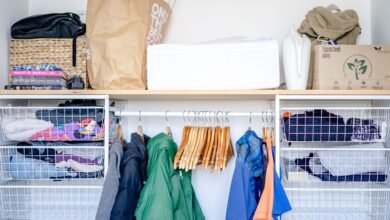
- Daily-use zone: near the house door, for things you grab weekly, such as shoes, shopping bags, pet gear, and recycling.
- Outdoor zone: near the main garage door, for lawn tools, hoses, and sports gear.
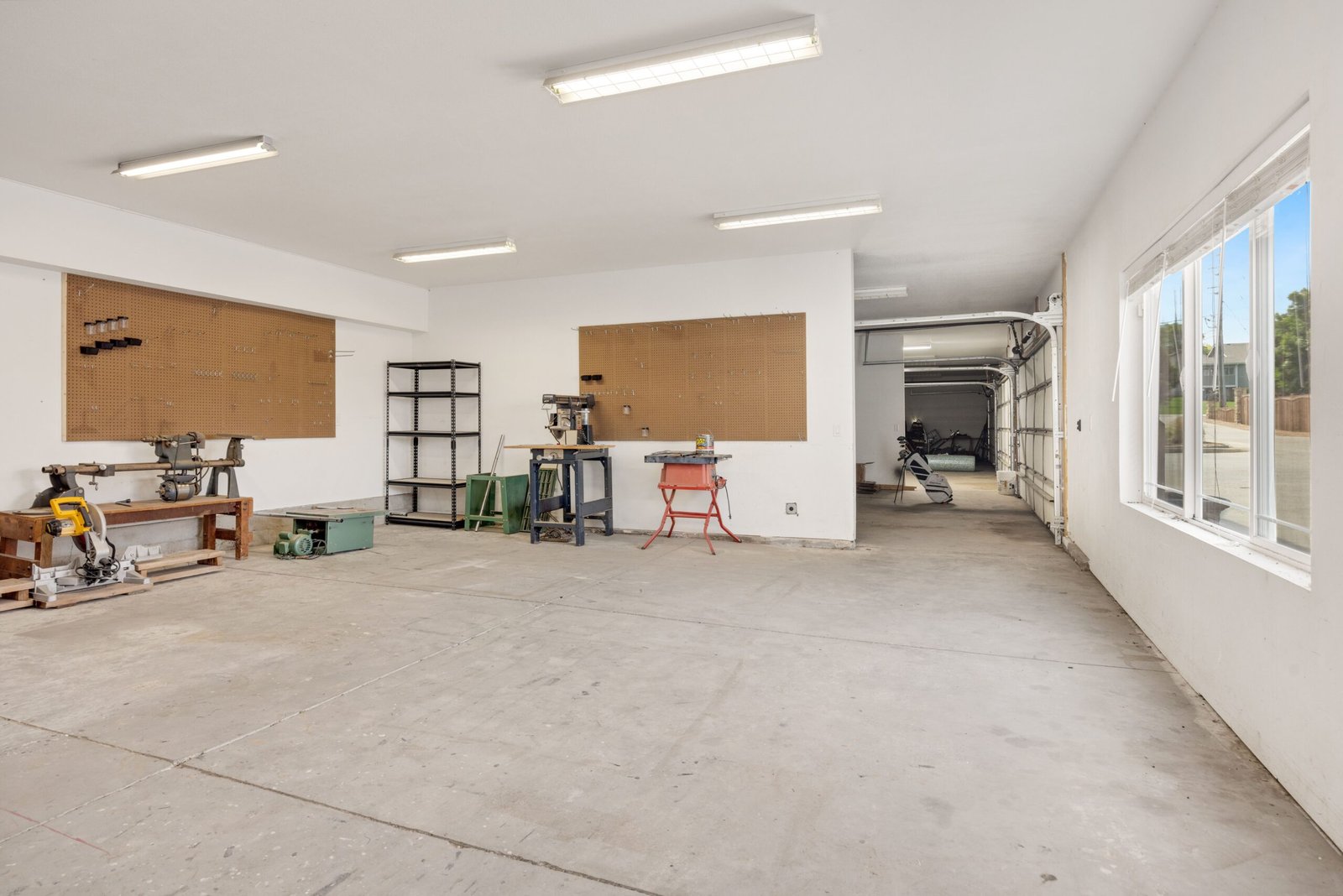
- Project zone: the workbench, tools, and hardware, ideally on the wall with the best light.
- Deep storage zone: high or far-corner space for seasonal and rarely used items.
Place heavy, frequently used items between knee and shoulder height. Keep light, rarely used items high and heavy ones low. Labeling each zone with a sign or a strip of tape helps everyone in the house put things back where they belong.
Idea 2: Install a rail or slatwall system on the studs
Wall systems are the most flexible garage organization ideas because you can rearrange hooks and baskets as your needs change. The key is anchoring them properly.
How to do it:
- Find the studs with a stud finder. In most homes they sit about 16 inches apart, measured from center to center.
- Mark a level line with a pencil and a spirit level.
- Fasten each rail into studs using the screws the manufacturer specifies, usually structural or lag-style screws.
- Place heavy tools like shovels at the lower and middle sections, and keep light items higher.
Safety note: Check the weight rating for the rail and for each hook. A rail may hold a lot in total, but a single hook may hold far less. If your wall is concrete block or masonry, use masonry anchors rated for the load rather than standard wood screws.

Idea 3: Use freestanding steel shelving, and anchor it
Freestanding shelves suit renters, masonry walls, and anyone who wants to take the system with them when they move. Steel or heavy-duty resin units handle weight better than thin plastic.
How to do it:
- Measure the available depth first. A 24-inch-deep unit takes up a lot of room, and a 16- to 18-inch unit often works better along the side of a car.
- Put heavy items on the bottom shelves and light ones on top.
- Use the wall-anchor strap that comes with most units. Tall shelves can tip, especially if a child climbs on them.
Group items by category in lidded bins. Opaque bins keep the look tidy, while clear ones make contents easy to find. A good compromise is opaque bins with a large label on the front and one side.
Idea 4: Add overhead racks for seasonal items
The ceiling is the most underused part of a garage. Overhead racks are ideal for holiday decorations, camping gear, and suitcases, items you reach for only a few times a year.
How to do it:
- Locate the ceiling joists, since the rack must be fixed into them, not just the drywall.
- Check the rack’s stated load capacity and stay well under it.
- Keep enough clearance so the open garage door and its tracks never touch the stored items. Garage Organization Ideas Open the door fully and measure before you decide the rack’s position.
- Use sealed plastic bins, not cardboard, which absorbs moisture and attracts pests.
If you are not sure your ceiling framing can take the load, ask a contractor to check before installing.
Idea 5: Get every bike off the floor
Bikes are among the biggest floor hogs because of their awkward handlebars and pedals. Garage Organization Ideas There are three good solutions, depending on your space:
- Vertical wall hooks: hang bikes by the front wheel. This works well in narrow garages, but handlebars stick out, so stagger the heights between neighboring bikes.
- Horizontal wall racks: bikes lie flat against the wall, which looks neat but requires a longer stretch of wall.
- Ceiling hoists: a pulley system lifts bikes overhead. This is great for heavy e-bikes only if the system and the ceiling are rated for the weight.
Mount the hook or rack into studs, not drywall. Garage Organization Ideas Hang helmets and shoes on nearby pegs so the whole “ride kit” lives in one place.
Idea 6: Build a kids’ sports and play station
Children’s gear spreads fast: balls, scooters, helmets, and pool toys. A simple station keeps it contained.
How to do it:
- Put a low shelf or a set of open bins near the house door, at a height the kids can reach themselves.
- Use a mesh bag or a bin with no lid for balls, since fewer steps mean more chances kids will actually tidy up.
- Hang a row of hooks at child height for helmets and backpacks.
- Keep anything hazardous, such as chemicals, sharp tools, and fertilizer, on high shelves or in a locked cabinet on the other side of the garage.
Separating “kid-safe” from “adult-only” zones is one of the most valuable things you can do in a family garage.
Idea 7: Organize lawn and garden gear by weight and handle length
Long-handled tools like rakes, brooms, and shovels cause most of the tangles. Garage Organization Ideas Hang them handle-up on a rail, or use a row of spring-clip holders, so you can pull one out without disturbing the others.
- Keep hoses coiled on a wall reel or a large wall-mounted hook, never on the floor.
- Store fertilizer, weed killer, and seeds in sealed, labeled containers on a shelf, away from children and pets and away from moisture.
- Keep gloves, hand trowels, and small tools in a single bin or bucket you can carry to the garden.
Place this zone close to the main garage door. Garage Organization Ideas The fewer steps between the shelf and the lawn, the more likely you are to put things away afterward.
Idea 8: Create a compact workbench that folds or rolls
You don’t need a full workshop to handle weekend repairs. Two flexible options work well in tight garages:
- Fold-down bench: a hinged tabletop mounted to wall studs that folds flat when you finish. Garage Organization Ideas Use heavy-duty hinges and a locking support leg or bracket.
- Rolling bench: a workbench on locking casters that you can push against the wall and pull out when needed.
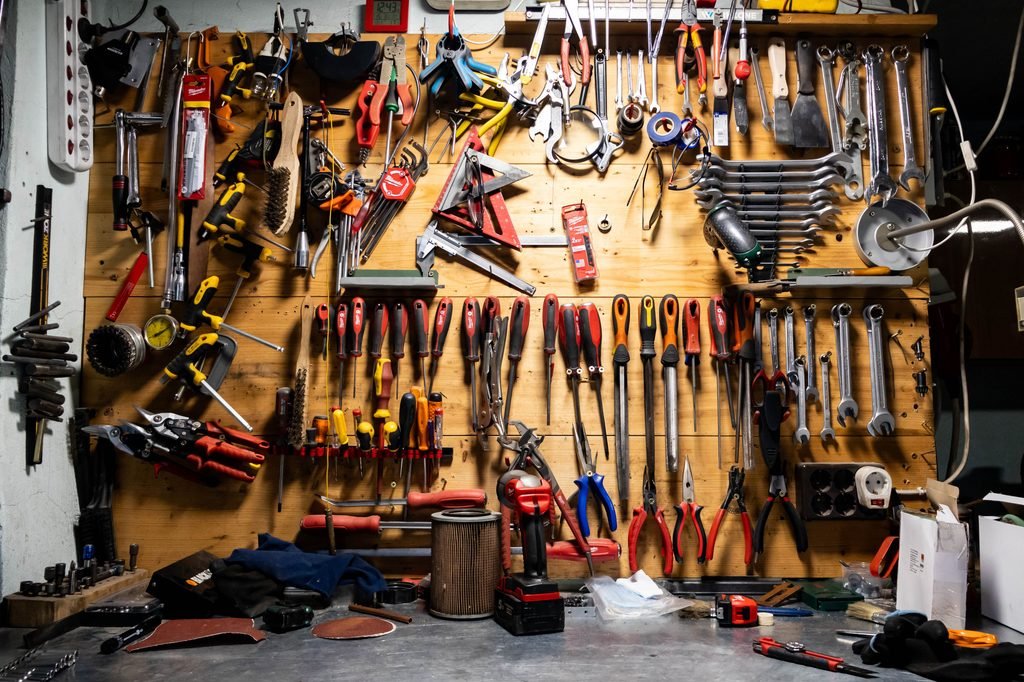
Mount a pegboard or magnetic strip above it for frequently used hand tools. Put a small power strip within reach, and light the area well. A bright task light above the bench matters more than almost any other upgrade for safe work.
Idea 9: Put heavy items on wheels
Anything you move often, such as a toolbox, a cooler, a shop vacuum, or a storage cart, should roll. Locking casters let you tuck items to the side when the car comes in, then pull them out for projects.
Choose casters with a rated capacity comfortably above the weight you plan to carry, and always engage the locks when the cart is in use. Garage Organization Ideas On a sloped garage floor, rolling carts can drift, so test them on your own floor before you load them.
Idea 10: Build a “drop zone” by the house door
The first two feet inside the house entrance decide whether the garage stays tidy. Garage Organization Ideas A narrow bench with shoe storage below, a row of hooks above, and a bin for pet gear and reusable bags will catch most daily clutter.
Add a small basket for keys, parcels, and items that need to go back inside. If the garage is dusty, use closed baskets or a cabinet with doors so shoes and bags stay clean.
Idea 11: Light it, label it, and mark the floor
Lighting and labeling are not decoration. They are what keep a system working after the first month.
- Lighting: replace a single dim bulb with LED shop lights or strip lights. Good lighting makes it easier to find things and reduces trips and cuts.
- Labels: use large, simple labels such as “Camping,” “Car care,” and “Paint.” Put them on the front and the top of each bin so you can read them from different angles.
- Floor marks: use tape or paint to mark where bins, carts, and trash cans live, so they return to the same spot each time.
Consider a quick weekend floor clean and, if the surface is porous, a concrete sealer. A sealed floor resists oil stains and is easier to sweep.
Idea 12: Rotate seasonal items twice a year
A good system needs a maintenance habit. Pick two dates, for example, the start of spring and the start of autumn, and swap seasonal items between the daily and deep-storage zones. Winter tools come down, garden gear moves forward, and the decorations go up.
While you rotate, run a ten-minute check: Are there damp spots? Any signs of pests? Any items you haven’t touched in a year? This small routine stops clutter from creeping back.
What Should Not Live in Your Garage
A tidy garage can still be an unsafe one if the wrong items are stored there. Garages swing between hot and cold, and many aren’t insulated. Be careful with the following:
- Paint and stains: extreme heat or freezing can spoil them. If you must store them in the garage, keep them off the floor and away from exterior walls, and consider moving them indoors in winter.
- Gasoline and flammable liquids: keep small amounts only, in approved containers, away from the water heater, the furnace, and any ignition source.
- Propane cylinders: local fire guidance generally recommends storing them outdoors, upright, and in the shade, not inside an attached garage.
- Lithium-ion batteries and electronics: store them at moderate temperatures. Garage Organization Ideas Very hot or cold garages can shorten their life and, in the case of damaged batteries, create a fire risk.
- Pet food and birdseed: leave it in the house or in sealed metal or hard plastic bins to avoid attracting rodents.
- Photos, documents, and fabrics: damp air and temperature swings damage them. Keep them in the house.
- Cardboard boxes: use plastic bins instead, because cardboard absorbs moisture and invites mold and pests.
If you have a freezer or a spare fridge in the garage, check that it is rated for the temperature range your garage sees. Some appliances are not designed to run in very cold or very hot conditions.
Budget Guide: Where to Spend and Where to Save
You don’t have to buy everything at once. Here is a sensible order:
- Free: declutter, map the car footprint, and zone the space.
- Low cost: hooks, labels, lidded bins, and a stud finder.
- Medium cost: a wall rail or slatwall system, a sturdy steel shelf, and good lighting.
- Higher cost: overhead racks, built-in cabinets, floor coatings, and a folding workbench.
Spend most on anything that holds weight, such as shelves, rails, and racks, because failure there is both costly and dangerous. Save on bins, labels, and small hooks, where basic versions work perfectly well.
Garage Organization Ideas for Small Garages
If you have a single-car garage, or a two-car garage already full of vehicles, keep these tactics in mind:
- Go vertical first. Walls and the ceiling give you the most extra space without losing floor area.
- Use shallow storage. Shelves 12 to 16 inches deep let you walk past a parked car more easily.
- Choose multitasking furniture. A bench with storage inside, a cart that doubles as a workbench, or a fold-down table all save space.
- Move bulky, rarely used items out. A backyard shed or a storage unit may be better for a lawn tractor or a large snow blower.
Common Mistakes to Avoid
- Buying organizers before decluttering. You end up storing things you didn’t need.
- Mounting hooks and racks into drywall alone. Always find the studs or joists.
- Ignoring the garage door’s travel path. Overhead storage should never interfere with the door or its opener.
- Overloading shelves and racks beyond their stated capacity.
- Using cardboard for long-term storage.
- Forgetting about the people who use the space. Garage Organization Ideas If kids or family members can’t reach or understand the system, it won’t last.
Frequently Asked Questions:
What should I do first before organizing my garage?
Start by mapping your car’s parking footprint. Park the car, open the doors fully, and outline the area on the floor with painter’s tape. Then declutter, and only buy shelves or hooks once both steps are done.
How can I make more space in a small garage?
Use the walls and ceiling first, so you gain space without losing floor area. Choose shelves that are 12 to 16 inches deep and furniture that does more than one job. Move bulky, rarely used items to a shed or storage unit.
What should I not store in my garage?
Avoid storing propane cylinders, large amounts of gasoline, and other flammable liquids. Paint, lithium-ion batteries, pet food, documents, and cardboard boxes can also be damaged by heat, cold, and damp, so keep them indoors or in suitable sealed containers.
Final Thoughts
The best garage organization ideas are not about expensive gadgets. Garage Organization Ideas They are about order: protect the car’s footprint, remove what doesn’t belong, group what remains into zones, and use the walls and ceiling before the floor. Anchor everything properly, respect weight limits, and keep hazardous items safe.
Start with a roll of tape and a few trash bags this weekend. Once you can walk around your parked car without squeezing past a bike, you will see how much a few smart garage organization ideas can change the way you use your home.