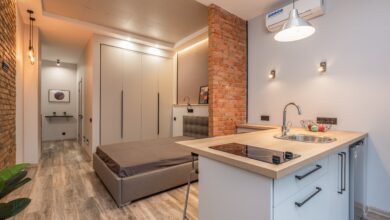
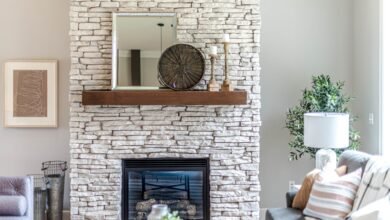
A living room does a lot of jobs. It hosts movie nights, quiet reading, conversation, and the occasional crowd. Wall Sconces for Living Room One overhead fixture can’t light all of that well, and a lamp on every surface can quickly crowd a small room. Wall sconces for living room spaces solve both problems. Wall Sconces for Living Room They bring light up to eye level, free up tables and floor space, and add a decorative detail to an otherwise plain wall.
This guide covers everything you need to plan your lighting with confidence: the types of sconces, how they are powered, how bright they should be, how high to hang them, how far apart to space them, and where they work best. Wall Sconces for Living Room It also covers the mistakes that make a sconce look awkward and the fixes for each one.
Why Wall Sconces Work So Well in a Living Room
Good lighting is built in layers. Wall Sconces for Living Room Designers usually describe three: ambient light for the whole room, task light for specific activities, and accent light for highlighting features. Wall sconces can handle all three, which makes them unusually flexible.
They create soft, even ambient light. A ceiling fixture lights the room from above, which can flatten the space and cast shadows on faces. Sconces sit at a lower, friendlier height. Wall Sconces for Living Room They wash the walls with a gentle glow, and that glow bounces back into the room.
They save space. Because sconces mount to the wall, they don’t need a table, a stand, or a spot on the floor. That matters in a small living room, in an apartment, or in a narrow space beside a sofa where a lamp would be knocked over.
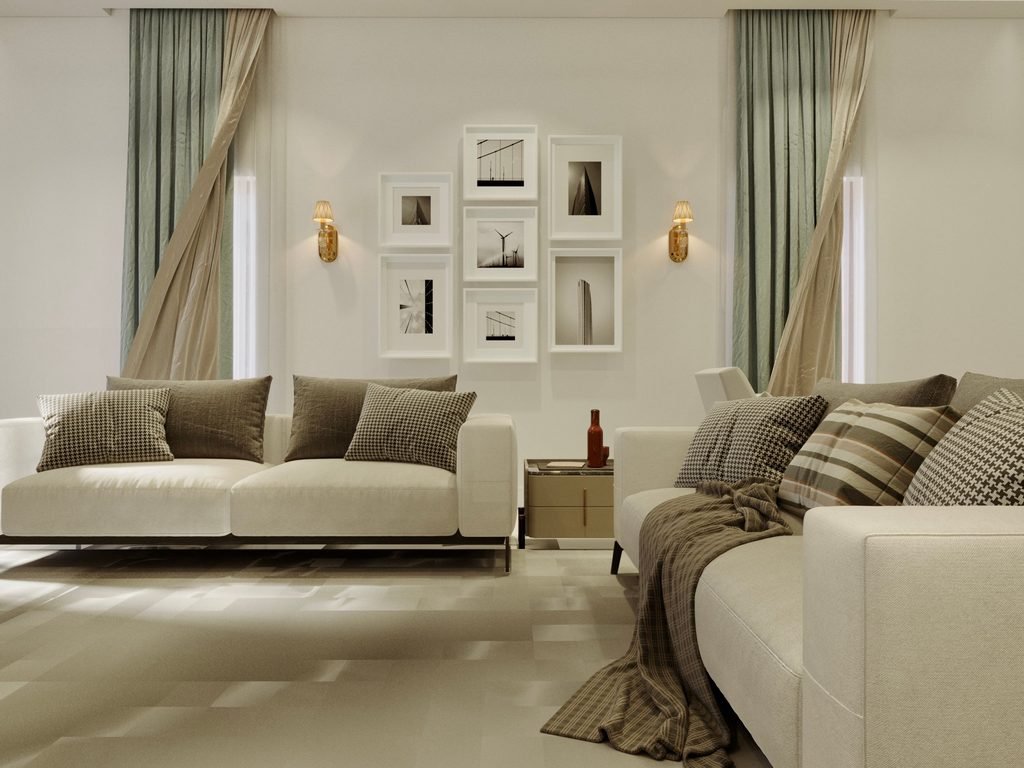
They add structure and symmetry. A pair of sconces on either side of a fireplace, mirror, or sofa frames the focal point and makes the arrangement feel planned.
They support the tasks you actually do. A swing arm sconce beside an armchair gives you a reading light. A picture light above a painting turns art into a feature. Wall Sconces for Living Room A dimmable pair near the television softens the contrast between a bright screen and a dark wall.
They work in every style. From slim brass candle fixtures to modern globes and rattan shades, there is a sconce for traditional, modern, coastal, rustic, and eclectic rooms.
The Main Types of Sconces for a Living Room
Knowing the types helps you buy for the job you need done. Here are the styles that suit a living room best.
Up-Light Sconces
These send light toward the ceiling. The light bounces off the ceiling and spreads back into the room, which gives a soft, indirect glow and can make a room feel taller. Wall Sconces for Living Room They suit living rooms that need extra general lighting, especially rooms with light-colored ceilings. A dark ceiling absorbs light, so uplights work less well there.
Down-Light Sconces
Down-light sconces aim light toward the floor or the furniture below. Wall Sconces for Living Room They create a more intimate, focused pool of light. Use them where you want a cozy feel, such as beside a sofa or armchair. On their own they rarely provide enough light for a whole room, so pair them with other sources.
Up-and-Down Sconces
These cast light in both directions, which creates an attractive wash on the wall and balanced light overall. Wall Sconces for Living Room Because the light goes both ways, they are a good choice for a hallway-style living room or for flanking a large piece of art or a mirror.
Swing Arm Sconces
A swing arm sconce has an adjustable arm that lets you move the light toward you and fold it back when you’re done. Wall Sconces for Living Room This makes it one of the best reading lights for a living room. Put one above the arm of a favorite chair or at the end of a sofa. Before buying, check how far the arm extends so it doesn’t hit a window, a door, or someone’s head.
Candle-Style Sconces
These imitate the look of a candle, usually with a small shade or glass cover. They give off less light than other types, so they work best as mood lighting rather than as the main source. Wall Sconces for Living Room They suit traditional and transitional rooms very well, and they look lovely in a group of two or three along a longer wall.
Picture Lights
A picture light is mounted above a framed piece to highlight it. It is built for accent lighting, not for lighting the room. A picture light works well for a single piece of art and is a smart way to add depth to an otherwise empty wall.
Wall Washers
A wall washer spreads light across a larger section of wall instead of a single object. Wall Sconces for Living Room Use one to highlight a textured wall such as brick, plaster, or wood paneling, or to make a wall appear larger.
Lantern-Style Sconces
Lantern sconces have a framed glass design and add a rustic or classic character. Wall Sconces for Living Room They suit living rooms with older architecture, farmhouse styling, or traditional furnishings.
Wallchieres
A wallchiere looks like a miniature floor lamp mounted to the wall, often with a decorative arm and shade. Wall Sconces for Living Room It adds a more formal, decorative look and works well in a living room that leans traditional or glamorous.
Hardwired vs. Plug-In: Which Should You Choose?
This is often the first decision, and it shapes both your budget and your options.
| Feature | Hardwired | Plug-In |
| Power source | Connected to your home’s electrical wiring | Cord and plug into a nearby outlet |
| Installation | Usually done by a licensed electrician | DIY with a few screws or a bracket |
| Look | Clean and built-in, with no visible cord | Cord is visible unless concealed |
| Control | Wall switch or dimmer | Switch on the cord or fixture, or a smart plug |
| Best for | New builds, renovations, permanent installs | Renters, quick updates, rooms without existing wiring |
| Cost | Higher, because of wiring and labor | Lower upfront |
Hardwired Sconces
Hardwired sconces connect to your home’s electrical system. If you are replacing an existing fixture, the wiring may already be in place. Wall Sconces for Living Room If you are adding sconces where there were none, an electrician will need to run wiring, install an electrical box, and connect a switch. Wiring is easiest to plan before walls are painted or finished, which is why many people add sconces during a remodel. Costs vary with your region and the condition of your wiring, so get a quote before you commit.
Plug-In Sconces
Plug-in sconces are the practical choice for renters and anyone who doesn’t want to open a wall. Wall Sconces for Living Room They mount with screws or brackets and plug into the nearest outlet. Many modern versions look as good as hardwired options.
Two tips will help a plug-in sconce look polished:
- Hide the cord. A paint-on-wall cord cover, a cord channel, or a cord that matches the wall color makes it far less noticeable. Some people use an in-wall cord concealment kit. Wall Sconces for Living Room If you do, choose one that is listed for in-wall use and follow your local electrical code, or ask an electrician to do it.
- Check the outlet location first. Plan the sconce position around where your outlets are, so the cord doesn’t have to stretch across the wall awkwardly.
For either type, make sure the wall can hold the weight. Heavier fixtures should be anchored into a stud or fastened with proper wall anchors.

How Bright Should Wall Sconces Be?
Many people buy a sconce that looks beautiful and then find it’s too dim or too glaring. Brightness is measured in lumens, not watts. Watts tell you how much energy a bulb uses, while lumens tell you how much light it gives off.
Choosing Lumens
For a living room, a common guideline is around 10 to 20 lumens per square foot of floor space for overall lighting, spread across all your light sources. Sconces rarely carry the full load. A single decorative sconce often works well in the range of about 200 to 450 lumens, which is enough for a soft glow. A reading sconce may need more, often 400 to 800 lumens, depending on the shade and how close it sits to the page.
For reference, an older 40-watt incandescent bulb produces roughly 450 lumens, and a 60-watt bulb produces about 800. Wall Sconces for Living Room LED bulbs use far less energy to reach those same numbers, so always check the lumen rating on the package.
Choosing Color Temperature
Color temperature, measured in Kelvins (K), controls how warm or cool the light looks.
- 2200K to 2700K: Very warm, candle-like glow. Cozy and flattering.
- 2700K to 3000K: Warm white. The most popular range for living rooms.
- 3500K to 4000K: Neutral to cool white. Feels more like an office or kitchen.
For a living room, warm white is usually the best choice. Use the same color temperature across all your bulbs so the room doesn’t look patchy.
Use Dimmers
A dimmer gives you control over the mood. Bright light is useful for cleaning or reading, and low light is ideal for evenings. If you want dimming, check that the sconce and the bulb are both dimmable, and that the dimmer is compatible with LED bulbs. Mismatched parts can cause flickering or buzzing. Plug-in sconces can use an inline dimmer or a dimmable smart plug.
Pay Attention to Color Accuracy
If your sconce will light artwork, look for a bulb with a high color rendering index (CRI). Wall Sconces for Living Room A CRI of 90 or higher shows colors more accurately, and many people prefer 95 or higher for art.
Pick the Right Shade, Finish, and Size
Once you know the type and the power source, the details of the design make the biggest visual difference.
Shade Materials
The shade controls how light leaves the fixture.
- Fabric or linen shades diffuse light into a soft, warm glow. They are the easiest choice for a calm living room.
- Clear glass lets more light through but can show the bulb, so use a decorative or low-glare bulb.
- Frosted or opal glass hides the bulb and spreads light evenly.
- Metal shades direct light up or down in a more focused beam, which gives dramatic wall patterns.
- Rattan or woven shades throw patterned light and add natural texture.
If you want a lot of light, choose a lighter or more open shade. If you want a quiet glow, choose a denser one.
Finishes
Pick a finish that relates to something already in the room, such as picture frames, door hardware, a coffee table, or a metal lamp base. Brass and gold add warmth. Black gives a crisp, modern outline. Nickel and chrome feel cool and clean. Bronze reads traditional. Wall Sconces for Living Room You don’t need to match every metal exactly. In fact, mixing two or three finishes can look more natural, as long as there is a pattern to it.
Scale and Proportion
Size matters as much as style. A sconce that is too small looks lost, and one that is too large crowds the wall. Match the scale of the sconce to what it sits beside:
- A tall, narrow sconce suits a tall fireplace or a long mirror.
- A smaller sconce works beside a small frame or a narrow console.
- On a large, empty wall, a pair of larger fixtures or an extended swing arm prevents the wall from feeling bare.
Also check how far the sconce sticks out from the wall. Wall Sconces for Living Room In a walkway or a narrow room, a slim sconce is safer. As a general accessibility guideline, objects mounted on walls in a walkway should protrude no more than about four inches, so slim fixtures are a good idea wherever people pass closely.
Wall Sconce Height and Spacing Guide
Placement is where most sconces go wrong. If they are hung too high, the light shines in your eyes or leaves the wall in shadow. If they are too low, the bulb is a glare source. These guidelines give you a reliable starting point.
| Situation | Suggested placement |
| General height | Center of the sconce around 60 to 66 inches from the floor |
| Tall ceilings (10 feet or higher) | Raise it a few inches, often into the 66 to 72 inch range |
| Either side of a sofa | Center around 60 to 66 inches, a comfortable distance from the sofa’s edge |
| Beside a reading chair | Position so the light falls over the shoulder, and use a swing arm for adjustment |
| Either side of a fireplace | Keep them level with each other and leave breathing room from the mantel |
| Either side of a mirror | Center them on the mirror, or place at about eye level on each side |
| Above a picture | Mount just above the frame, so the light falls across the art |
| Along a long wall or hallway | Space roughly 6 to 10 feet apart so there’s rhythm without clutter |
Some practical rules of thumb:
- Keep the bulb out of direct sight. Unless the bulb is meant to show, the light source should sit slightly above eye level when you’re seated or standing in the main viewing area. A shade helps hide it.
- Match heights across a pair. Even small differences are noticeable. Wall Sconces for Living Room Use a level and measure from the floor, not from the ceiling, as ceilings aren’t always perfectly level.
- Center the pair on the feature. If you are flanking a mirror, a sofa, or a fireplace, find the center of that feature first, then measure out equally on each side.
- Do a paper test. Cut paper to the size of the fixture, tape it to the wall, and stand back. Live with it for a day before you drill. It’s an easy way to catch a placement mistake.
- Use painter’s tape to mark the wiring or bracket position. This helps you line everything up before cutting or drilling.
Where to Put Wall Sconces in the Living Room
Here are the placements that work most reliably, with a note on what each one does best.
Beside the Fireplace
A pair of sconces on either side of the fireplace frames the hearth and keeps the focus on it. Wall Sconces for Living Room Choose up-and-down or candle-style fixtures to keep the glow soft. This works especially well if you also have art or a mirror above the mantel, because the sconces tie the whole display together.
On Either Side of the Sofa
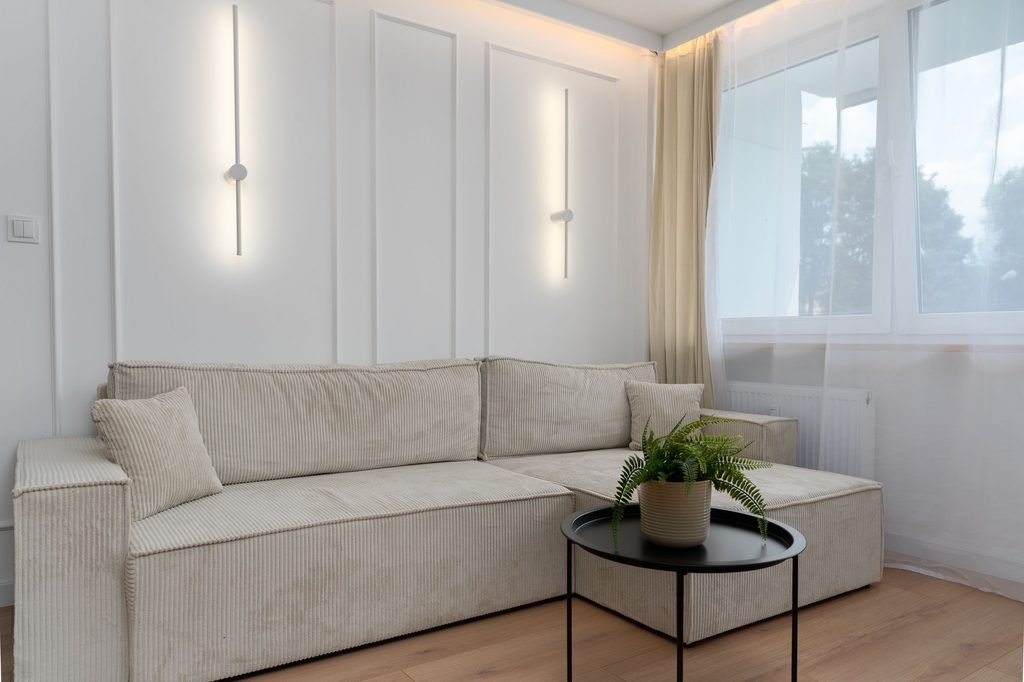
Sconces flanking the sofa work like built-in side lamps. Wall Sconces for Living Room They free up the end tables for drinks, books, and remote controls. Make sure they’re centered on the sofa or line up with its sides, so the arrangement feels intentional.
Beside a Reading Chair
A swing arm sconce next to an armchair gives you a dedicated reading corner. Choose one with a shade that blocks glare from your eyes. A dimmer or a switch on the fixture itself makes it easy to control from the seat.
Around a Mirror
Placing sconces on either side of a mirror brightens the room and bounces light around. The mirror reflects the glow, which makes the space feel bigger and brighter. Keep the sconces at about eye level so the light is flattering rather than harsh.
Above Artwork
A picture light or a sconce above a painting makes art a feature. A single fixture centered over the frame works for a smaller piece, while a pair of sconces at each side works better for a large piece or a gallery wall.
Beside the Television
A bright screen in a dark room strains the eyes. Sconces on either side of the TV wall, set to a low dimmer level, soften the contrast. Wall Sconces for Living Room Choose fixtures with shades that don’t reflect off the screen, and avoid bare, bright bulbs near the display.
In a Corner or Nook
A single sconce in a blank corner adds a glow where a floor lamp would otherwise sit. It’s a good way to fill a dark spot without losing floor space.
Around Windows or Built-Ins
Sconces on either side of a window or a built-in bookshelf add symmetry and provide light in the evening, when the window offers none. On shelving, a small plug-in sconce can light a display without a visible lamp.
Style Ideas for Different Living Rooms
- Modern: Choose clean lines, simple globes, or slim bar-shaped fixtures in black, brass, or nickel.
- Traditional: Pick candle-style or wallchiere designs with fabric shades and warm metal finishes.
- Coastal: Look for woven, rattan, or white-washed shades and light finishes.
- Farmhouse or rustic: Lantern styles, wood backplates, or iron arms work nicely.
- Mid-century: Swing arms with slim metal arms and simple cone or globe shades feel right.
- Eclectic: Mix a bold sculptural piece with plainer surroundings, and let one sconce stand out as art.
Common Mistakes to Avoid
- Hanging them too high or too low. This is the most common issue. Wall Sconces for Living Room Start around 60 to 66 inches and adjust for the room.
- Relying on sconces alone. They are best as one layer. Combine them with a ceiling light, table lamps, or floor lamps for balance.
- Choosing the wrong brightness. Check the lumens, and use a dimmer to fine-tune.
- Mixing bulb colors. Different color temperatures in one room look uneven. Keep them consistent.
- Ignoring the cord on a plug-in. A visible, dangling cord makes the whole look feel temporary. Hide or match it.
- Forgetting how far they stick out. Measure the projection, especially for swing arms and in narrow rooms.
- Buying a pair that doesn’t fit the wall. Scale it to the feature you’re lighting.
- Using non-dimmable bulbs with a dimmer. This leads to flicker and buzzing.
- Skipping a test run. Tape up a template before you drill.
Budget Considerations
Prices vary widely. Basic plug-in sconces can start at a modest price, often in the range of $30 to $60. Mid-range options with better materials and finishes commonly fall between about $100 and $300. Designer and handmade fixtures can cost much more. Hardwired sconces add the cost of an electrician and any wall repair or painting after the wiring is done.
A smart way to spend is to invest in the pieces people notice most, such as a pair beside the fireplace or sofa, and save on bulbs, cord covers, and smaller accents. Buying a pair at the same time from the same batch also helps ensure the finish and shade match exactly.
Safety and Installation Basics
- Turn off the power at the breaker before touching any wiring. If you are not comfortable, hire a licensed electrician.
- Follow the fixture’s maximum wattage rating, even with LED bulbs, and use the bulb type the fixture recommends.
- Use the right anchors. Fasten into a stud where possible, or use anchors rated for the weight of the fixture.
- Keep fabric shades away from heat. Use LED bulbs, which run much cooler.
- Don’t run an ordinary cord inside a wall. Use only products designed and listed for that purpose, and follow local rules.
- Check local building codes before adding wiring, especially in older homes.
Frequently Asked Questions
How many wall sconces do I need in my living room?
It depends on the size of the room and the purpose. Most living rooms look balanced with one pair near the main focal point, such as the fireplace or sofa, plus an optional reading sconce. In a larger room, you might add a pair on a second wall. Wall Sconces for Living Room Quality of light matters more than quantity.
Can wall sconces be the only light in a living room?
They can in a small room if you choose bright, well-placed fixtures with enough lumens. In most rooms, though, they work best alongside other lighting for a layered look.
What height should wall sconces be hung in a living room?
A good starting point is 60 to 66 inches from the floor to the center of the fixture, raising it a few inches for tall ceilings. Adjust based on the shade, the furniture, and what you’re lighting.
Are plug-in wall sconces a good option?
Yes. They are ideal for renters and for anyone who wants to avoid electrical work. Hide the cord for the cleanest look, and mount them securely.
What bulb is best for living room wall sconces?
A dimmable LED bulb in warm white (around 2700K to 3000K) is the best all-round choice. Check that the bulb shape and base fit the fixture, and choose enough lumens for the sconce’s purpose.
Should wall sconces match the other lights in the room?
They don’t need to be identical, but they should relate through finish, shape, or style. Repeating one element, like the metal finish, usually ties everything together.
Can I use wall sconces in a small living room?
Yes, and they’re one of the best ways to light a small room. Because they use no floor or table space, they keep the room open and feel airy. Choose slim fixtures that don’t stick out too far.
Final Thoughts: Wall Sconces for Living Room
Wall sconces for living room spaces do far more than fill a blank wall. Wall Sconces for Living Room They shape the mood, support daily activities, and add a layer of detail that makes the whole room feel considered. Start by deciding what you want the light to do. Wall Sconces for Living Room Then choose the right type, decide between hardwired and plug-in, check the lumens and color temperature, and hang each fixture at the right height. Wall Sconces for Living Room Measure twice, test with a paper template, and put your sconces on a dimmer.
Get those few details right, and a plain living room can become a warm, comfortable space you’ll want to spend your evenings in.