
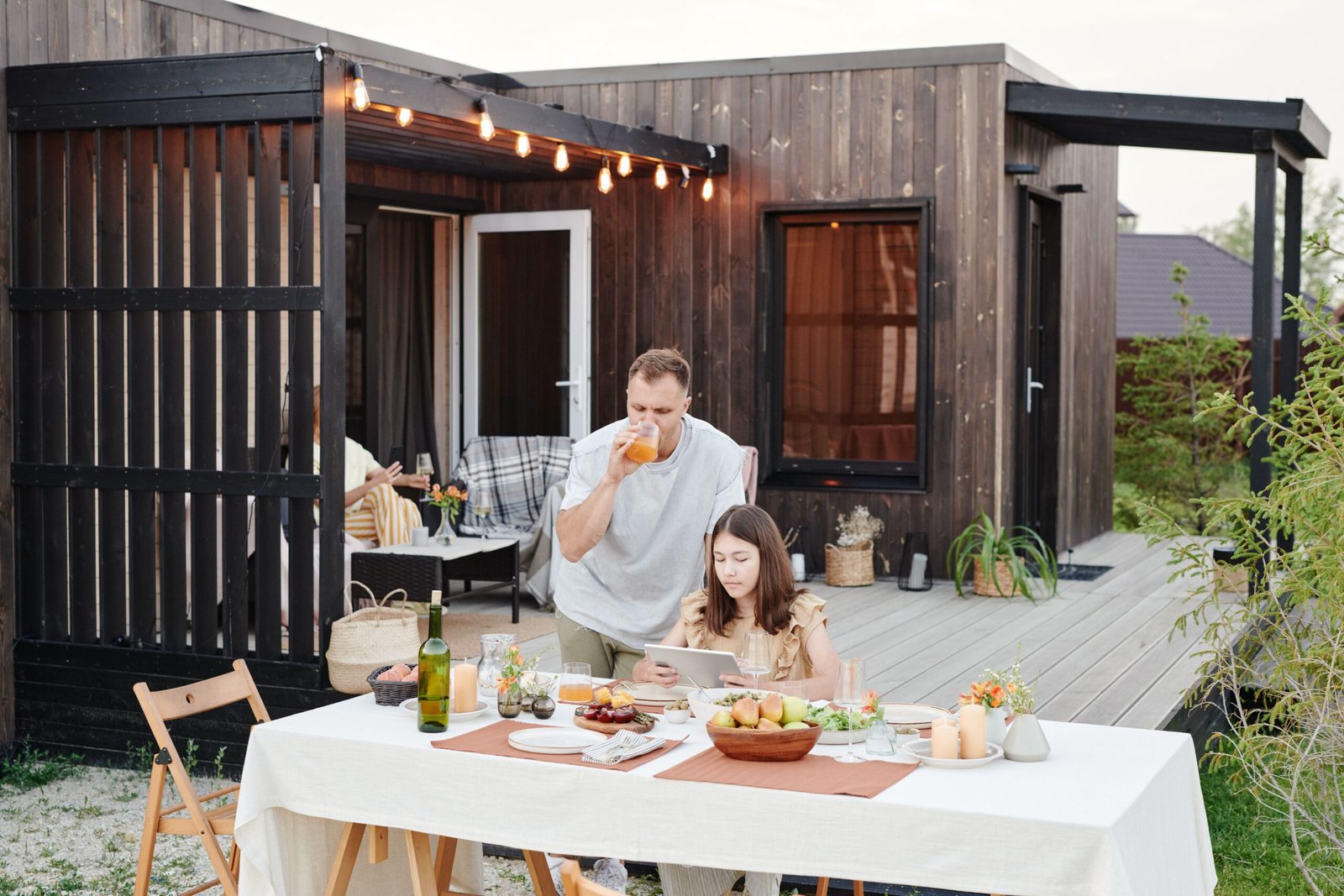
The best outdoor kitchen ideas are the ones that fit how you actually cook, how much space you have, and what your weather throws at you. A grill with a rolling prep cart counts. So does a fully plumbed island with a pizza oven, a sink, and a bar.
This guide gives you 24 outdoor kitchen ideas grouped by situation: small patios, entertaining layouts, rainy or freezing climates, and style choices. Outdoor Kitchen Ideas You will also find planning numbers (counter heights, walkway widths, stool spacing), a plain cost breakdown, permit and safety reminders, and a winterizing checklist. These are the practical details many idea lists skip.
Read the planning section first, pick two or three ideas that match your yard, and ignore the rest. Outdoor Kitchen Ideas A smaller kitchen that gets used every weekend beats a showpiece that sits cold.
Plan Before You Pick a Look
Settle five things before you fall in love with a finish.
Location. Put the kitchen close to your indoor kitchen. Every long walk across the yard for a forgotten spatula means less use. Check the wind direction so smoke drifts away from seating and neighbors. Avoid spots in full afternoon sun, where stainless steel can get too hot to touch.
Utilities. Decide early whether you need gas, water, drainage, and electricity. Outdoor Kitchen Ideas Each one adds cost and limits where the kitchen can go. Gas lines and most electrical and plumbing work should be done by licensed professionals, and outdoor outlets in the US need GFCI protection.
Layout. The common shapes are a straight line, an L, a U, and a freestanding island. A straight run suits narrow patios. An L creates a natural work zone with room for a bar. A U handles large crowds. Keep the sink, grill, and prep counter within a few steps of each other.
Sizes that work. Standard counter height is 36 inches and bar height is 42 inches. Outdoor Kitchen Ideas Counter depth of 24 to 30 inches is typical. Leave 36 to 48 inches of walking space around the cooking zone and plan about 24 inches of width per bar stool. Always follow the grill maker’s written clearance rules for walls, overhead covers, and combustible materials.
Order of decisions. Start with how you cook (grill, smoker, pizza oven). Outdoor Kitchen Ideas Then choose storage and counters, then seating and lighting, and finish with colors and materials. Planning in this order stops a beautiful backsplash from crowding out the appliance you actually use.
Outdoor Kitchen Ideas for Small Spaces and Tight Budgets
1. Start With a Grill and One Solid Counter
A grill beside a 4- to 6-foot weatherproof counter gives you the three things you use most: heat, prep space, and a place to set down plates. Add a few hooks for tools and one shelf for oils and spices. Outdoor Kitchen Ideas No plumbing is needed, so this is the cheapest way to begin.
2. Put the Kitchen on Wheels
A cart-style grill, a rolling prep cart, and a bar cart can be rearranged for each meal and tucked away afterward. Outdoor Kitchen Ideas This suits renters and small patios. Choose carts with locking casters, and cover or store them during bad weather.
3. Build a Balcony or Rooftop Galley
A single wall run of 6 to 8 feet can hold a grill, a small fridge, and a counter. Outdoor Kitchen Ideas Before buying anything, check your lease, HOA, and local fire code. Many buildings restrict gas or charcoal grills on balconies and roof decks, and rooftops have weight limits.
4. Use a Pass-Through Window
A sliding window or bifold opening between your indoor kitchen and a patio counter lets you serve without carrying plates through the house. It gives you much of an outdoor kitchen’s convenience without duplicate appliances.
5. Try a Smart DIY Build
Concrete block, steel studs with cement board, or a prefab island frame are common DIY bases. Around a built-in grill, use only non-combustible materials. Wood is fine for freestanding prep tables and shelves placed away from heat.
6. Go Vertical With Wall Storage
A wall-mounted shelf, a rail with hanging tools, and a fold-down counter free up floor space. Outdoor Kitchen Ideas Mount a narrow planter of herbs at arm’s reach so cooking and garnishing happen in the same spot.
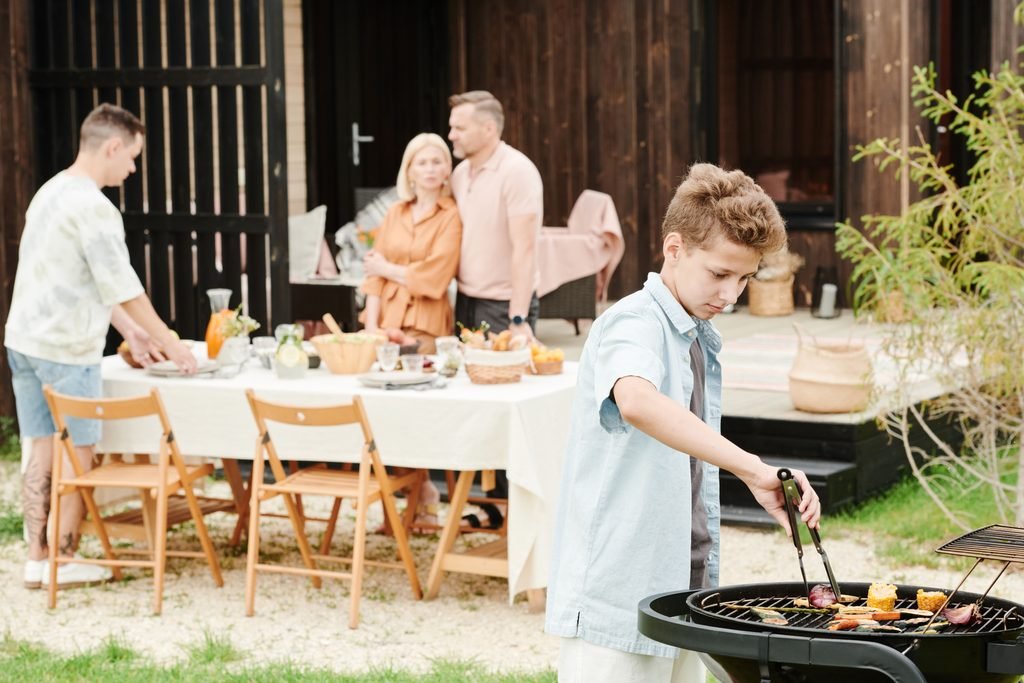
Layout Ideas for Entertaining and Serious Cooking
7. L-Shaped Island With a Bar Overhang
Put the grill and prep zone on the long leg and a bar on the short one. Outdoor Kitchen Ideas An overhang of about 12 inches on the 42-inch bar side gives seated guests knee room, and they stay in conversation with the cook.
8. One-Wall Linear Kitchen
Sink, grill, and fridge in one straight row leave the rest of the patio free for a dining table. It is simple to plumb because all the services run along one line.
9. U-Shaped Kitchen for Big Crowds
A U shape gives the cook three work surfaces and lets guests line up along the outside edge. It needs more floor space, so measure carefully before committing.
10. Add a Pizza Oven
Wood-fired and gas pizza ovens both work. Leave heat-resistant counter space beside the oven for the peel and hot pans, and store dry wood nearby if you burn it. Follow the maker’s clearance rules and keep the opening facing away from the prevailing wind.
11. Create a Drink Station
A small fridge, an ice bin, and a sink on the bar side keep guests out of the cooking zone. Buy a fridge rated for outdoor use. Indoor models are not built for heat, humidity, and big temperature swings.
12. Keep Dining Within a Few Steps
Place the table close enough to carry food without a long walk. A built-in banquette against a wall saves the space a set of chairs would need and works well on small patios.
Outdoor Kitchen Ideas for Any Climate
13. Cover the Cooking Zone
A pergola with a solid roof section or a full roof protects the cook and the appliances from sun and rain. Safety comes first here: never run a gas or charcoal grill in a fully enclosed space, because carbon monoxide builds up. Under a roof, follow the grill maker’s rules and add proper ventilation, such as a rated hood.
14. Choose Adjustable Shade
A retractable awning or a louvered pergola lets you block midday sun and still open up the sky in the evening. It is a flexible choice where weather changes by season.
15. Plan Heat for Cool Evenings
Infrared ceiling heaters, freestanding patio heaters, and a fireplace all extend the season. Wind screens on open sides help both heaters and grill flames. Keep heaters at the distance the manufacturer specifies from fabric and overhead beams.
16. Layer Your Lighting
Most kitchens fail at night because one floodlight does all the work. Instead, use task lighting over the grill and counter, softer light at the dining table, and string lights or lanterns for mood. Low-voltage LED fixtures are efficient and safer to install in damp areas.
17. Add a Fire Feature at a Safe Distance
A fire pit or outdoor fireplace turns a cooking area into a gathering place. Keep it away from the grill, gas lines, and overhead structures, and check local burn rules before building anything wood-burning.
18. Match the Build to Your Weather
In cold climates, choose granite or porcelain, stainless steel, and appliances rated for low temperatures, and plan for draining water lines. In hot, sunny regions, add shade, pick lighter countertop colors that stay cooler, and consider motorized or fixed insect screens. In humid or coastal areas, specify materials that resist moisture and salt.
Style and Setting Ideas
19. Modern and Minimal
Flat-front cabinets, a concrete or porcelain top, and stainless appliances give a clean, low-maintenance look. Keep decor to a few plants and good lighting.
20. Rustic Stone and Brick
Natural stone or brick veneer on the island base feels at home in garden settings. Warm wood details work best on seating and shelves, away from the grill.
21. Coastal-Ready Materials
Salt air attacks ordinary steel. Specify 316-grade (marine) stainless steel and cabinets made from HDPE or similar weatherproof polymers, which do not swell or rot like wood-based boards.
22. Echo the House Exterior
Repeat the color of your siding, trim, or stone on the island. The kitchen then looks planned rather than dropped onto the patio.
23. Weave in Greenery
Use a trellis, raised planters, or a living wall to soften hard surfaces and give shade. Keep herbs close to the prep counter, and keep plants a safe distance from flames and heaters.
24. Poolside Convenience
A kitchen within sight of the pool lets adults cook and watch swimmers at once. Choose non-slip paving, surfaces that tolerate chlorine splash, and unbreakable dinnerware near the water.
Materials That Last Outdoors (and Ones to Skip)
Outdoor kitchens fail from moisture, sun, and temperature swings, so material choice matters more than style. Here is how the common options compare.
| Material | Best for | Watch out for |
| Stainless steel (304 inland, 316 coastal) | Doors, drawers, appliances | Fingerprints, heat in direct sun, rust in salt air if the grade is low |
| Granite | Countertops | Needs periodic sealing; follow the installer’s schedule |
| Porcelain slab | Countertops and cladding | Edges can chip; needs an experienced fabricator |
| Concrete | Custom shapes and islands | Must be sealed; can crack without proper joints |
| HDPE or polymer cabinets | Wet, coastal, or humid sites | Fewer color choices |
| Teak and other hardwoods | Seating, shelves, trim | Needs oiling; keep away from grill heat |
Skip indoor cabinet boxes made of MDF or particleboard, which swell when wet. Most quartz (engineered stone) manufacturers also advise against direct outdoor sun, because the resin can fade or discolor, so check the warranty before choosing it. Ask every supplier whether the product is rated for outdoor use, and keep that rating in writing.
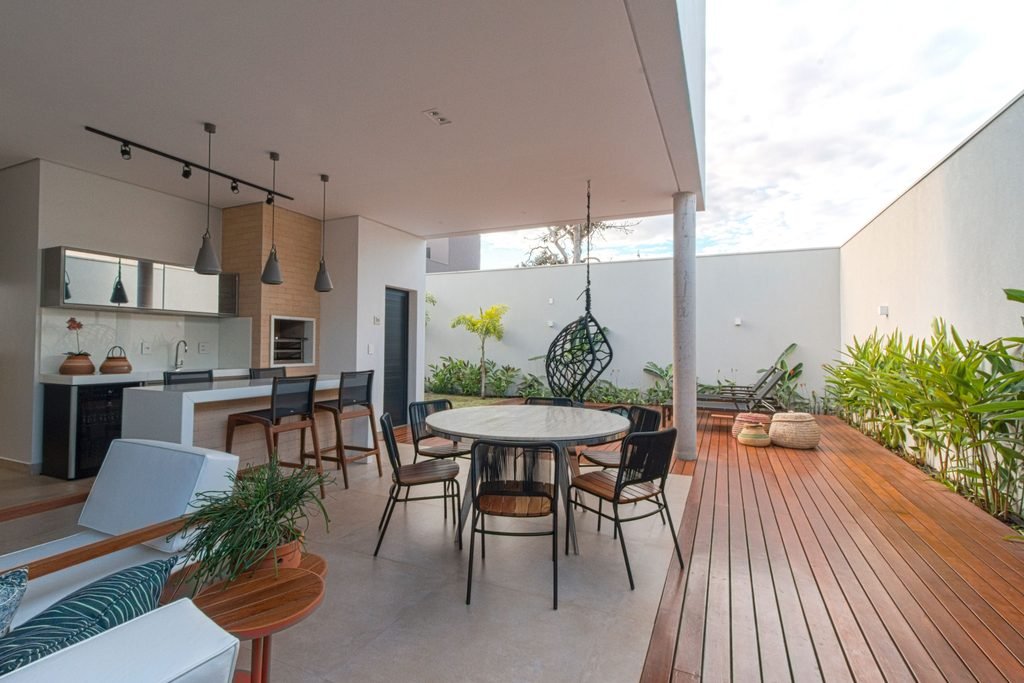
Cost, Permits, Maintenance, and Winterizing
What an Outdoor Kitchen Costs
Prices swing widely by region, labor rates, and appliance choices. Treat these US figures as rough planning ranges and get two or three written quotes before you decide.
| Level | What you get | Rough cost (USD) |
| Basic | Grill, cart or small counter, no utilities | $2,000 to $8,000 |
| Mid-range | Built-in island, grill, storage, stone top, some utilities | $8,000 to $25,000 |
| High-end | Plumbed and gas-fired kitchen with fridge, pizza oven, bar, and roof | $30,000 to $100,000 and up |
The fastest ways to control cost are to keep the kitchen near the house (shorter utility runs), pick one standout feature instead of five, and spend on safety, ventilation, and waterproofing before decoration.
Permits and Rules
Requirements vary by city. Gas, electrical, and plumbing work commonly needs a permit and a licensed installer. Structures such as roofs may be subject to setback and height rules, and an HOA may add its own limits. Call your local building department before you buy materials.
Everyday Maintenance
Clean grill grates after each use, wipe stainless steel along the grain, and reseal stone on the schedule the installer gives you. Cover appliances when not in use and keep drains and gutters near the kitchen clear.
Winterizing Checklist
In freezing climates, shut off the water supply and drain pipes and the sink. Empty the outdoor fridge and leave the door ajar or move the unit inside. Disconnect propane tanks and shut off gas lines. Cover grills and counters, and bring cushions and small appliances indoors.
Outdoor Kitchen Ideas: Quick Answers
How much space do I need?
A grill with a 4- to 6-foot counter fits in about 6 to 8 feet of wall length. Add 36 to 48 inches of clear walkway in front for comfortable use.
What is the cheapest way to start?
Buy a good grill, a rolling cart, and a weatherproof folding table. You can upgrade to a built-in island later without wasting the first purchase.
Can I use it all year?
Yes in many climates, with a roof, a heater, wind protection, and materials rated for your lowest temperatures.
Does an outdoor kitchen add home value?
It can, but the effect depends on your local market, build quality, and climate. Treat it as a lifestyle upgrade first and a resale bonus second.
Do I need a permit?
Often, if the project involves gas, electricity, plumbing, or a roofed structure. Ask your local building department.
Final Thoughts
The strongest outdoor kitchen ideas share a few traits: they sit close to the house, suit the climate, use outdoor-rated materials, and put safety ahead of decoration. Choose the cooking method you will use weekly, build the layout around it, and add comfort and style in stages. Start small, plan the utilities early, and your outdoor kitchen will keep earning its place long after the first party.




One Comment