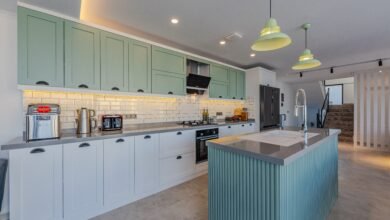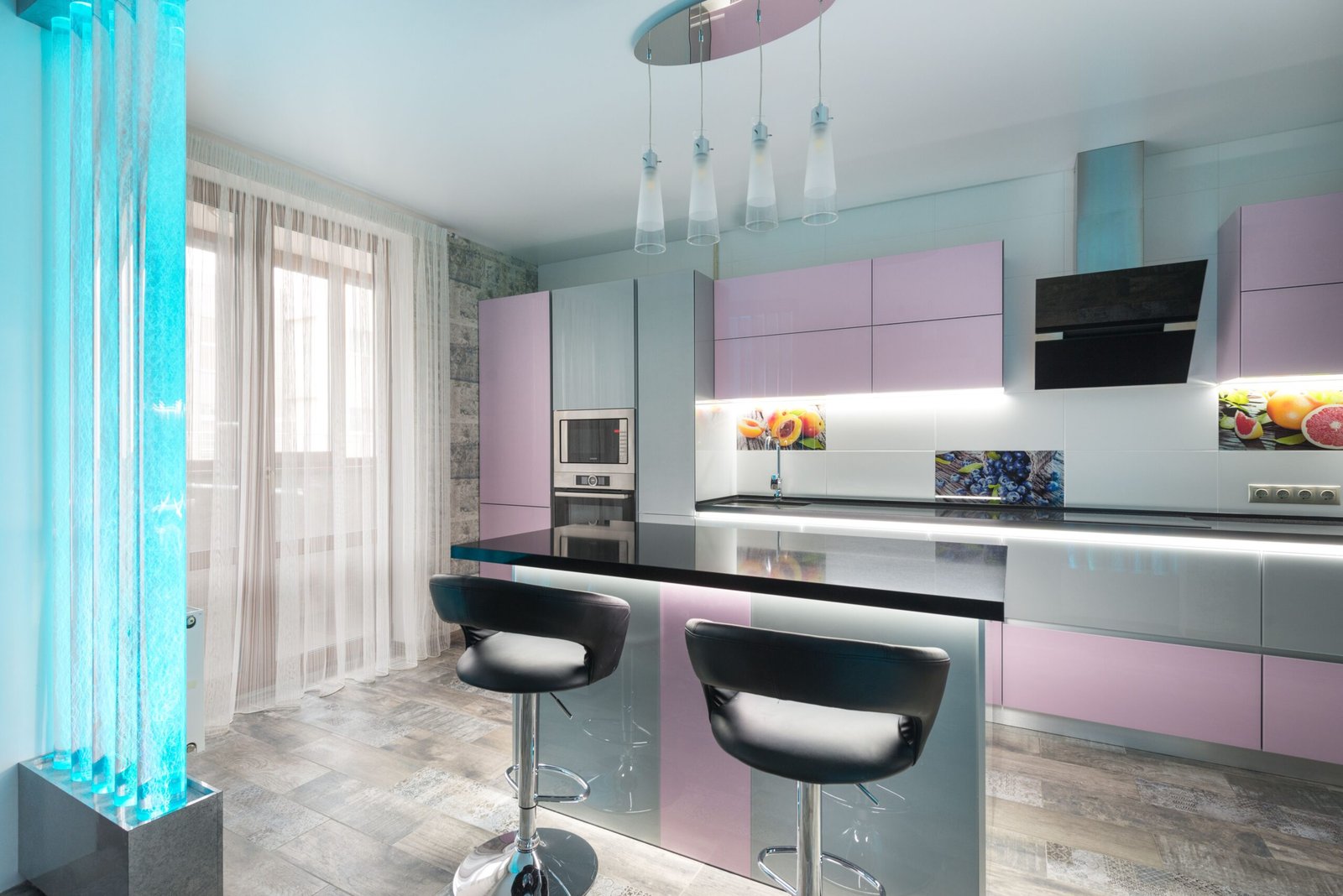
Few rooms work as hard as the kitchen. You chop vegetables there, help with homework, host friends and sometimes answer emails, all in one day. Kitchen Lighting Ideas That is why the best kitchen lighting ideas do not rely on a single ceiling fixture. They combine several layers of light, each with its own job, so the room can switch from bright and practical to soft and relaxed in seconds.
This guide covers the planning rules first, then 15 practical ideas, then small kitchens, bulb choices, common mistakes and answers to the questions people ask most. Kitchen Lighting Ideas Measurements are given in both inches and centimeters, so you can use the numbers whichever system you prefer.
Why Layered Lighting Matters
A single bright light creates glare and sharp shadows exactly where you need to see clearly. A layered plan avoids that by spreading light across three levels:
- Task lighting brightens the places where you work: countertops, the hob, the sink and the island.
- Ambient lighting fills the room with general light so it feels comfortable and evenly lit.
- Accent lighting adds depth by highlighting shelves, glass cabinets, textured walls or a favorite feature.
You do not need every layer in every kitchen, but most well-lit kitchens use at least two. The ideas below show how to combine them.
Kitchen Lighting Numbers at a Glance
Keep this table nearby while you plan. These are widely used starting points, so adjust them to your ceiling height and room size.
| Detail | Starting guideline |
| Pendant height over an island | 30 to 36 in (76 to 91 cm) above the counter |
| Extra height for tall ceilings | Add about 3 in (7.5 cm) per extra foot above 8 ft (2.4 m) |
| Gap between pendants | 24 to 30 in (60 to 76 cm) apart |
| Space from island ends | At least 6 in (15 cm) |
| Recessed light spacing | About 4 to 6 ft (1.2 to 1.8 m) apart |
| Bulb color temperature | 2700K to 3500K for most kitchens |
| Color accuracy (CRI) | 80 or higher, ideally 90 |
| General brightness | Around 30 to 40 lumens per sq ft (about 320 to 430 per sq m) |
How to Plan Before You Buy
Good planning saves money, because moving a wired fitting later is expensive. Kitchen Lighting Ideas Work through these steps first:
- Map your zones. Mark the sink, hob, prep area, island, dining area and any nooks.
- List what happens in each zone. Chopping needs bright, shadow-free light, while a breakfast bar needs gentle light.
- Decide which layers each zone needs. Most work zones need task light, and most open areas need ambient light.
- Plan switches and dimmers. Put each layer on its own control so you can mix them.
- Choose one color temperature. Pick a single warm white value for every bulb in the room.
15 Kitchen Lighting Ideas
1. Place Recessed Downlights Over Work Zones
Recessed downlights give clean, general light without cluttering the ceiling. Kitchen Lighting Ideas Aim to place them about 2 ft (60 cm) from the wall edge so the beam falls on the front of the countertop and cabinets, rather than casting your shadow onto the work surface. Space them roughly 4 to 6 ft (1.2 to 1.8 m) apart and choose wide-beam, dimmable versions.
2. Choose Tilting Downlights for Flexibility
Fixed downlights point straight down, which can leave cabinet doors dim. Tilting (directional) versions can be angled toward the counter or the cabinet fronts. Kitchen Lighting Ideas They are useful in awkward layouts, and they work well near tall cabinetry where a straight beam would miss the surface you need to see.
3. Add Under-Cabinet Strip Lighting
Under-cabinet strips are among the most useful task lights, because they remove the shadow your body casts when you stand at the counter. Kitchen Lighting Ideas Look for strips with a diffuser so you do not see individual LED dots reflected in a glossy countertop. Mounting them toward the front of the cabinet underside lights the work surface evenly, while mounting nearer the wall highlights a decorative backsplash.
4. Hang Island Pendants at the Right Height
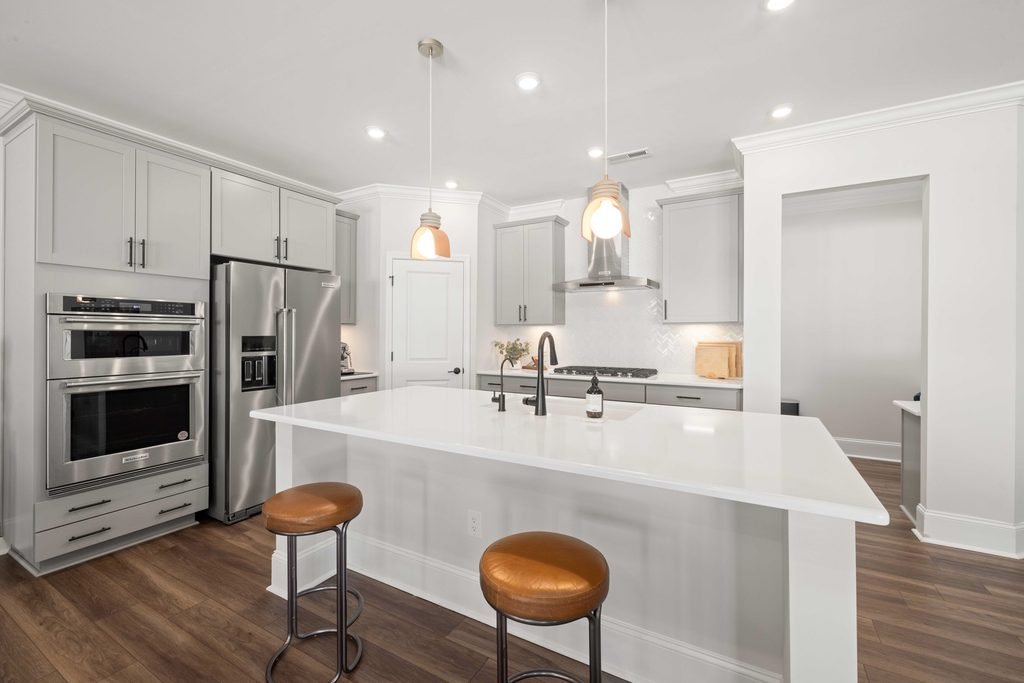
Pendants over an island should sit 30 to 36 in (76 to 91 cm) above the counter on a standard 8 ft (2.4 m) ceiling. If your ceiling is taller, add about 3 in (7.5 cm) for each extra foot. Keep at least 6 in (15 cm) clear at each end of the island, and check that tall people can see across the room without a fixture blocking their view.
5. Choose One Large Pendant or a Group of Three
A single large pendant works well over a round or square island, while a row of three suits a long rectangular one. Space a row 24 to 30 in (60 to 76 cm) apart, measured between centers. Whichever you choose, scale the fixtures to the island. Too small looks lost, and too large dominates the room.
6. Add a Small Pendant or Sconce Over the Sink
The sink is a working zone that many plans forget. Kitchen Lighting Ideas A small pendant, a swing-arm light or a wall sconce above or beside it provides soft task light for washing up. Choose a fixture with a wipeable finish, since steam and splashes are certain.
7. Define the Dining Area With a Decorative Light
In an open-plan room, a decorative fixture over the dining table separates it visually from the cooking area. Use a different style from the island lights, or repeat the same finish so the two zones feel related. Kitchen Lighting Ideas Avoid placing large statement fixtures over both the island and the table if they are close together, because they will compete.
8. Use Wall Sconces and Swing-Arm Lights
Wall lights save ceiling space and add a softer glow than downlights. Kitchen Lighting Ideas Swing-arm styles can be pulled toward the counter when needed and pushed back later. Mounted high near the ceiling with downward-facing shades, sconces light the edges of the room and make the space feel taller.
9. Hide LED Strips for Subtle Accent Light
Concealed LEDs add atmosphere without adding visible fixtures. Place them inside glass-front cabinets, behind open shelving or along the toe-kick at the base of cabinets, where they create a soft, floating look at night. Choose warm white strips and keep the glow gentle, because over-lit plinths can look like a showroom.
10. Bring in Portable Lamps
A rechargeable or plug-in table lamp on the counter adds a warm pool of light when the main lights are off. It is also a renter-friendly solution, since no wiring is involved. Pick a lamp with a wipeable base and keep it away from the hob and sink.
11. Choose One Statement Fixture
Kitchens do not have much room for decoration, so a beautiful light can do that job. A sculptural pendant, a glass globe or a handcrafted fitting becomes a focal point. Kitchen Lighting Ideas Keep the rest of the lighting simple, so the statement piece stands out instead of competing with the other fixtures.
12. Use Flush or Semi-Flush Fittings for Low Ceilings
If your ceiling is low, a pendant can feel intrusive. Flush-mount and semi-flush fittings sit close to the ceiling and spread light widely. Combine them with wall lights or under-cabinet strips, so the room still has layered light and does not depend on one fixture.
13. Mix Finishes, but Limit the Number
Brass, black, nickel and bronze can sit together nicely if you keep to two or three finishes and repeat them. Kitchen Lighting Ideas For example, match the pendant finish to the cabinet hardware, and repeat the wall light finish somewhere else, such as a faucet or a picture frame. Repetition makes a mix look deliberate.
14. Put Every Layer on a Dimmer
Dimmers are one of the cheapest upgrades with the biggest effect. Full brightness is ideal for cooking, while a lowered setting suits dinner or a quiet evening. Kitchen Lighting Ideas Use dimmers designed for LED bulbs, and put each layer on its own switch, so you can combine downlights, pendants and accent lights in different ways.
15. Light the Pantry and Any Nooks
Pantries, coffee stations and alcoves are often dark. A strip under a shelf, a small ceiling light or a motion-activated fitting makes them easy to use. In a windowless pantry, motion sensors are especially handy, because the light turns on as soon as you open the door.
Kitchen Lighting Ideas for Small Kitchens
In a small kitchen, every fixture has to earn its place. These rules help:
- Use slim, low-profile fittings so the ceiling does not feel crowded.
- Rely on under-cabinet lights to brighten counters without using floor or wall space.
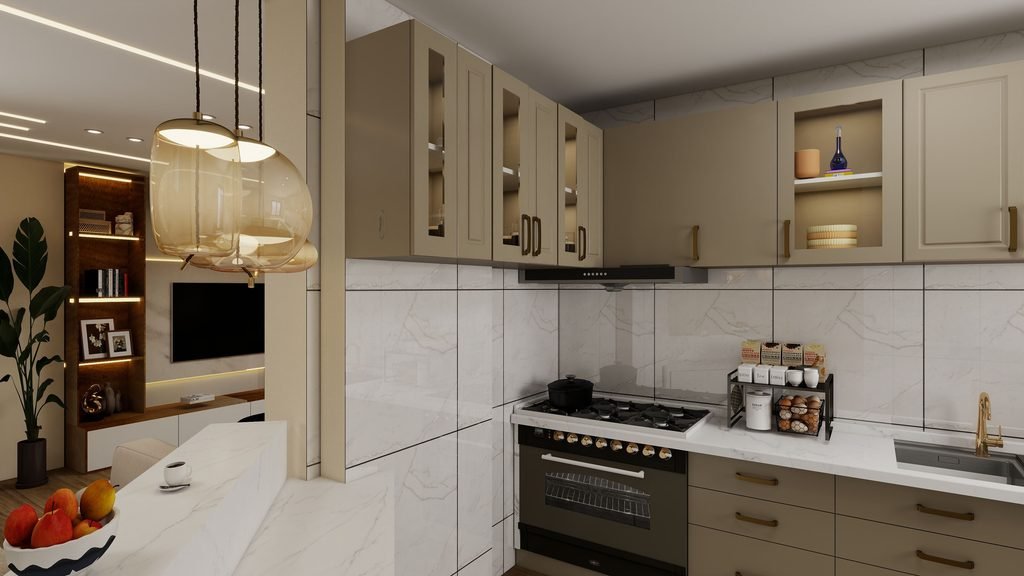
- Choose open or transparent pendant shades so the light does not feel heavy.
- Keep one color temperature throughout, so the room feels cohesive.
- Avoid over-lighting. Too many tightly spaced bright lights cause glare. Plan by zone instead of filling the ceiling evenly.
Reflective surfaces, such as glass cabinet doors, a mirror near the window or a glossy backsplash, also bounce light around, which helps a compact room feel brighter.
Choosing the Right Bulbs
The fixture gets the attention, but the bulb determines how the light feels.
Color temperature. This is measured in Kelvin (K). 2700K to 3000K is a warm white that suits dining areas and relaxed spaces. Around 3000K to 3500K works for general kitchen lighting, and slightly cooler white up to about 4000K can suit task areas. Very cool light of 5000K or more can feel harsh in a home kitchen, so most people avoid it. Kitchen Lighting Ideas Whatever you pick, use the same value across fixtures. Mixed temperatures look uneven.
CRI (color rendering index). This shows how accurately a bulb displays colors. Kitchen Lighting Ideas Choose 80 or higher, and 90 or higher if you want food, wood and tiles to look natural.
Lumens. This measures brightness, so check lumens rather than watts. A common planning starting point is around 30 to 40 lumens per square foot for general light, with extra for work areas. Dimmers let you fine-tune the result.
Bulb type. LED bulbs are the usual choice because they run cool and use less electricity than older bulbs. Many are rated for 15,000 hours or more. Always check that a bulb is dimmable before you pair it with a dimmer.
Common Kitchen Lighting Mistakes to Avoid
Relying on one ceiling light. A single source creates shadows over the counter. Add task light under the cabinets.
Mixing color temperatures. One warm bulb next to a cool one makes the room look uneven. Choose a single value.
Hanging pendants too low or too high. Follow the 30 to 36 in (76 to 91 cm) guideline and check sightlines before final installation.
Choosing fabric shades near the hob. Fabric absorbs grease and is hard to clean. Glass, metal or enamel is easier to wipe.
Skipping dimmers and separate switches. Without them, the kitchen has only one mood.
Ignoring safety. Fittings near water or heat should be suitable for kitchen use, and hardwired work should be done by a qualified electrician. Kitchen Lighting Ideas If you buy a reclaimed or vintage light, have it rewired and checked to meet current electrical standards.
Frequently Asked Questions
What is the best lighting for a kitchen?
A combination works best: recessed or flush ceiling lights for general light, under-cabinet strips for task light, and pendants or wall lights for style and mood. Put each layer on its own dimmer.
What color temperature is best for kitchen lighting?
Most kitchens look best between 2700K and 3500K, which feels warm but still clear. Kitchen Lighting Ideas Task areas can go slightly cooler, up to about 4000K, as long as the whole room still looks consistent.
How high should pendant lights hang over a kitchen island?
Hang them 30 to 36 in (76 to 91 cm) above the countertop on an 8 ft (2.4 m) ceiling. If the ceiling is higher, add about 3 in (7.5 cm) for each extra foot.
How many lights does a kitchen need?
It depends on the size and layout, so plan by zone rather than by count. As a starting point, aim for around 30 to 40 lumens per square foot for general light, then add task lighting where you work.
What are good kitchen lighting ideas for low ceilings?
Use flush or semi-flush ceiling lights, slim recessed downlights, wall sconces and under-cabinet strips. These keep the ceiling clear while still providing layered light.
Final Thoughts
The best kitchen lighting ideas start with how you use the room, not with the fixtures. Map your zones, layer task, ambient and accent light, choose one warm color temperature and put everything on dimmers. Kitchen Lighting Ideas Then add personality with a pendant, a sconce or a hidden glow. Follow the heights and spacing in this guide and avoid the common mistakes, and your kitchen will feel bright when you cook and welcoming when you do not.