The television wall is usually the first thing you notice when you walk into a living room. It is where the seating points, where the lighting gathers, and where most of the evening happens. Yet it is also the part of the room people plan last, often leaving a large dark rectangle floating on a bare wall.
The good news is that a well-planned TV wall does not need to be expensive or complicated. These living room TV wall ideas cover everything from a single can of paint to custom built-in cabinetry, with honest notes on cost, installation, and the details that most guides skip: screen height, viewing distance, cables, mounting, and glare.
Quick answer: The best living room TV wall is the one that suits your room size, seating position, and budget. Paint, a low console, and a properly mounted TV work for most homes. Living Room TV Wall Ideas Wood slats, floating cabinets, and built-ins add more character and storage. Whatever you choose, plan the screen height, power, and cable route before you buy any materials.
Plan the Basics Before You Choose a Design
A beautiful wall that is uncomfortable to watch is a failure, however good it looks in photos. Living Room TV Wall Ideas Settle these five points first, and every design below becomes easier to get right.
Screen Height
Aim to place the center of the screen close to eye level when you are seated. For most sofas, that is roughly 40 to 45 inches (100 to 115 cm) from the floor. Mounting higher feels dramatic, but it forces you to tilt your head back, which gets tiring during a long film. Before drilling anything, tape a paper outline of the TV to the wall and sit in your usual spot to test it.
Viewing Distance
For a 4K television, a comfortable distance is roughly one to one and a half times the screen’s diagonal measurement. For a 65-inch TV, that is about 5.5 to 8 feet. Larger distances suit brighter rooms and casual viewing, while shorter ones feel more cinematic. Check the sofa ends too, since the seats at the sides of a sectional get the worst angle.
Power and Cables
Plan the outlet and cable route before any panel or cabinet goes up. A standard TV power cord must never be run inside a wall. Living Room TV Wall Ideas The safe options are a recessed outlet installed behind the TV by a licensed electrician, or an in-wall-rated power kit installed according to local code. HDMI and other low-voltage cables can go in the wall using rated cable, ideally with a conduit so you can swap them later.
Mounting and Wall Type
Check the weight and the VESA pattern (the bolt layout on the back of the TV) and choose a mount rated above both. Fix it into studs or into masonry with the correct anchors. Living Room TV Wall Ideas Decorative slats, thin panels, and plasterboard alone cannot carry a television, so the mount should always attach to the structure behind the finish.
Glare and Ventilation
A screen facing a large window will pick up reflections in the afternoon. Matte wall finishes, curtains, and a slight tilt can help. If the TV or a game console sits inside a recess or cabinet, leave air gaps around the equipment, because trapped heat shortens the life of electronics.
15 Living Room TV Wall Ideas
1. Wood Slat Wall
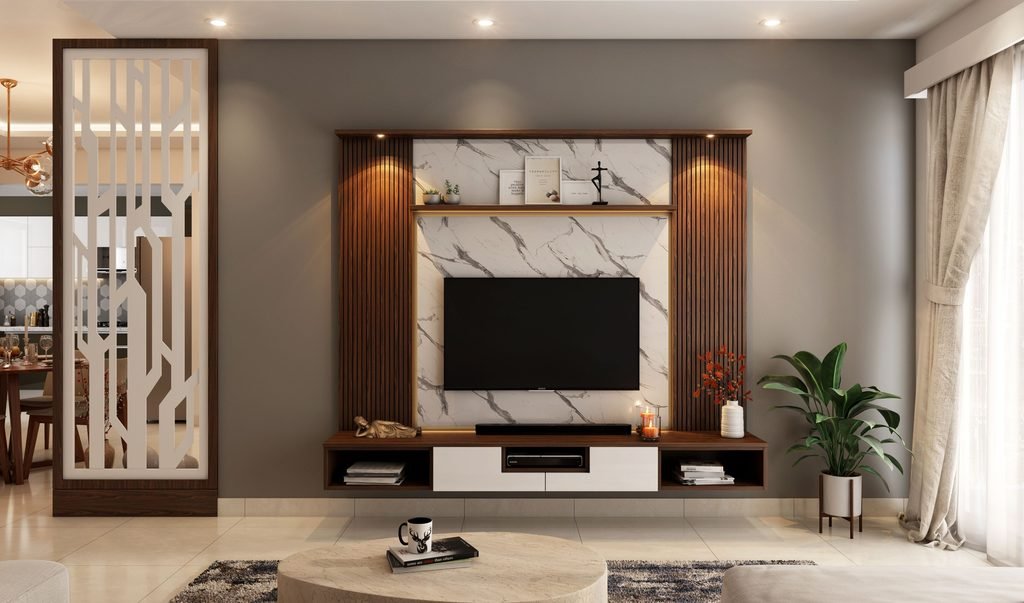
Vertical wood slats add texture and make the ceiling feel higher, especially when they run floor to ceiling. Oak and walnut tones suit warm, modern rooms, and a dark backing panel between the slats makes the screen blend in. Living Room TV Wall Ideas Add a low console in a matching finish.
Best for: modern and Scandinavian-style rooms. Typical cost: roughly $300 to $1,500 for DIY panel kits, more for custom joinery. Watch out for: dust collecting in the gaps, and cutting neatly around outlets. Mount the TV to the wall behind, not to the slats.
2. Dark Painted Wall
A deep color such as charcoal, navy, or olive reduces the contrast between the screen and the wall, so the TV looks less dominant when it is off. Living Room TV Wall Ideas Pair it with a lighter sofa and a natural wood console to keep the room from feeling heavy.
Best for: renters with permission to paint and anyone on a tight budget. Typical cost: about $50 to $200 for paint and supplies. Watch out for: dark colors can make a dim room feel smaller. Test samples in both daylight and evening light.
3. Floating Console Under a Wall-Mounted TV
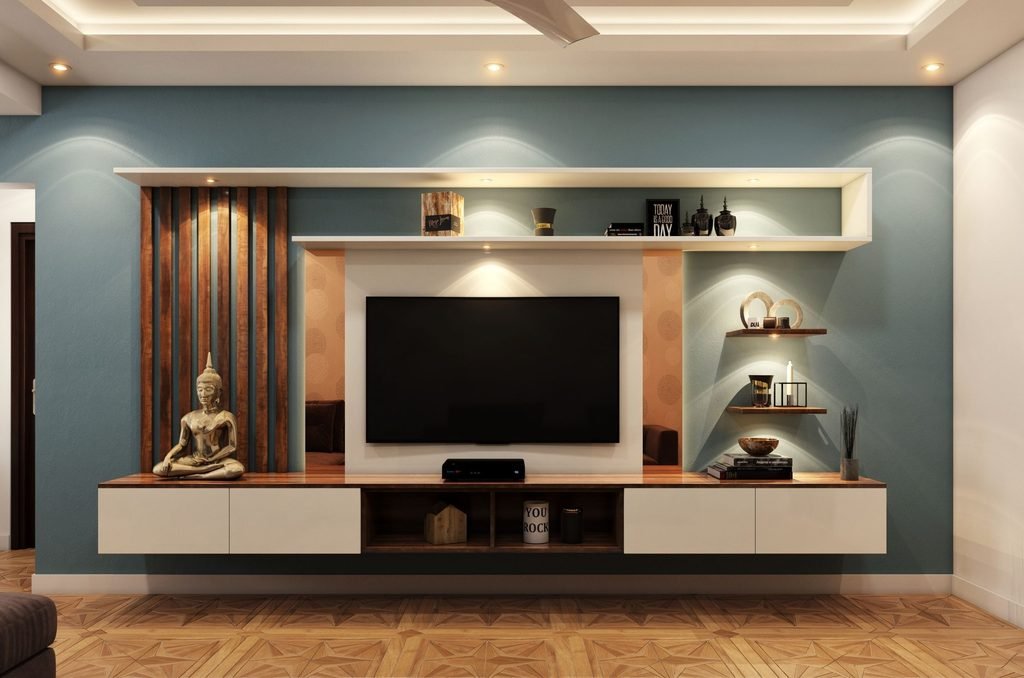
A wall-hung cabinet leaves the floor visible beneath it, which makes small rooms feel bigger and makes vacuuming easier. Drawers hide remotes and chargers, and a soundbar can sit neatly in the gap between cabinet and screen.
Best for: apartments and compact living rooms. Typical cost: roughly $150 to $800. Watch out for: the cabinet must be fixed into studs or masonry with the right hardware, and its load rating must cover the equipment you put on it.
4. Built-In Cabinets and Shelves
Built-ins turn the whole wall into one piece of furniture. Living Room TV Wall Ideas A common layout places the TV in the center, closed cabinets below, and shelves or tall units on either side. Paint the units in warm white, soft gray, or muted green, and add wood shelves for warmth.
Best for: larger rooms and families who need serious storage. Typical cost: often several thousand dollars, and custom work can exceed $10,000. Watch out for: ventilation for equipment, shallow depth so the room does not feel crowded, and an opening large enough for your next, bigger TV.
5. Open Shelving on Both Sides
Floating shelves on either side of the screen soften the hard edges of the TV and give you somewhere to display books, plants, and ceramics. Living Room TV Wall Ideas Leave several shelves partly empty so the wall looks styled rather than cluttered.
Best for: adding character without the cost of full cabinetry. Typical cost: about $100 to $500. Watch out for: heavy items need proper wall fixings, and nothing fragile should sit above the screen.
6. Stone-Look Feature Wall
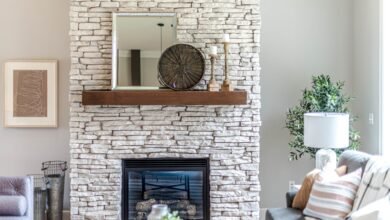
Porcelain slabs, stone veneer, or textured panels with a limestone or marble look create a calm, high-end backdrop. Choose a soft, subtle pattern rather than strong veining, which competes with the picture. A matte black or walnut console balances the texture.
Best for: contemporary rooms that want one statement surface. Typical cost: from about $1,000 for panels to several thousand dollars for large installed slabs. Watch out for: weight. Real stone and big slabs may need structural preparation, and lightweight panels should be checked for fire rating and mounting compatibility.
7. Fireplace and TV Combination
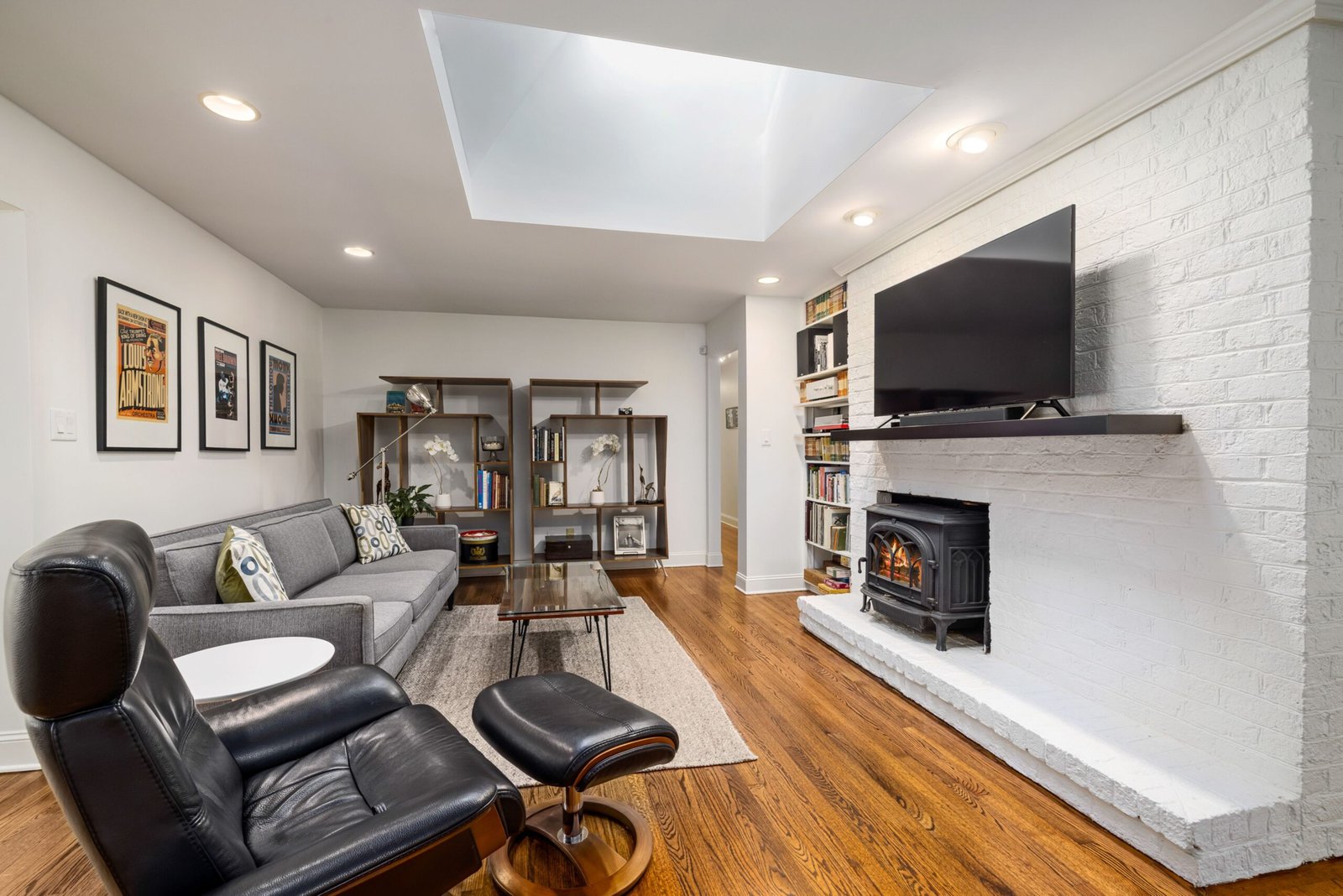
A fireplace and television can share one wall and create a single gathering point. Living Room TV Wall Ideas A linear electric fireplace beneath the screen is the most common arrangement.
Best for: rooms where the fireplace is already the focal point. Typical cost: roughly $500 to $3,000, depending on the fireplace and finish. Watch out for: heat and viewing height. Living Room TV Wall Ideas Always follow the fireplace and TV manufacturers’ clearance rules, and consider placing the fireplace beside the screen if stacking would push the TV too high.
8. Vertical Shiplap or Wall Paneling
Painted white, cream, sage, or greige, vertical boards add quiet architectural detail without drama. Living Room TV Wall Ideas They work in farmhouse, coastal, and transitional rooms alike. Keep decoration minimal so the texture stays visible.
Best for: adding depth to a plain wall at a modest price. Typical cost: roughly $200 to $800 for a DIY wall. Watch out for: the extra wall thickness changes outlet positions, so plan the electrical work first.
9. Painted Arch or Color Block
A large arch or rectangle in a slightly deeper shade frames the TV and console without construction. Muted sage, warm taupe, and dusty terracotta all look modern. Make the shape wide enough to connect the TV and furniture rather than a thin stripe.
Best for: renters and budget makeovers. Typical cost: about $50 to $150. Watch out for: proportion. Mark the outline with painter’s tape and view it from the sofa before you paint.
10. Limewash or Plaster-Look Finish
A soft, textured finish in warm off-white, sand, or taupe gives the wall subtle movement that flat paint cannot. It makes the TV feel less harsh and pairs well with a low wood console and simple ceramics.
Best for: warm, relaxed, contemporary rooms. Typical cost: about $100 to $300 for DIY products, more for a professional finish. Watch out for: repairs can be hard to blend, so choose it for a wall you will not need to open up often.
11. Gallery Wall Around the TV
Framed art and photographs make a large screen look like part of a display instead of a black hole. Living Room TV Wall Ideas Use a limited set of frame finishes, keep even spacing, and echo colors from the rest of the room.
Best for: eclectic and personality-filled rooms. Typical cost: about $50 to $400, depending on the art. Watch out for: never hang heavy frames directly above the TV where a failed fixing could damage it or hurt someone.
12. Corner TV Setup
When windows, doors, and open layouts leave no clear wall, a corner can work well, provided the main seating faces it. Living Room TV Wall Ideas Use a compact corner cabinet or a full-motion mount rated for your TV.
Best for: awkward layouts and small rooms. Typical cost: roughly $100 to $600. Watch out for: make sure the TV can swing without hitting walls, and that cables have enough slack throughout the mount’s range.
13. Hidden TV Behind Doors or Panels
Sliding panels or cabinet doors let you hide the screen when it is off, which suits formal rooms and multi-use spaces. The wall then looks like a clean wood or painted feature.
Best for: rooms where the TV should disappear between uses. Typical cost: often $1,500 or more, since it needs custom work. Watch out for: always open the doors fully before turning on the TV and equipment, so heat cannot build up inside.
14. Backlit Wall With Soft LED Lighting
A gentle glow behind the TV reduces the contrast between the screen and the wall, which is easier on the eyes in a dark room. LED strips can also run under floating cabinets or inside shelves.
Best for: movie nights and evening viewing. Typical cost: about $30 to $150 for a basic setup. Watch out for: keep the light warm and dim, make sure it does not shine into viewers’ eyes or reflect on the screen, and do not block vents.
15. Two-Tone Wall in Wood and Paint
Combine a wood panel section behind the TV with painted wall around it, or wood on the lower half with paint above. Living Room TV Wall Ideas Pick a wood that echoes your floor or furniture, then choose a paint color that complements it.
Best for: medium and large rooms that need interest without full cabinetry. Typical cost: roughly $300 to $1,200. Watch out for: stick to two finishes. More than that makes the wall look busy.
Which TV Wall Idea Suits Your Room?
These cost ranges are rough estimates and vary by region, materials, and labor.
| Idea | Best for | Budget level | Skill level |
| Wood slats | Modern rooms | Medium | DIY or pro |
| Dark painted wall | Renters, small budgets | Low | DIY |
| Floating console | Small rooms | Low to medium | DIY |
| Built-in cabinets | Large family rooms | High | Pro |
| Open shelving | Display storage | Low to medium | DIY |
| Stone-look wall | Statement walls | Medium to high | Pro |
| Fireplace combo | Fireplace-led rooms | Medium to high | Pro |
| Vertical shiplap | Plain walls | Low to medium | DIY |
| Painted arch | Renters | Low | DIY |
| Plaster-look finish | Warm modern rooms | Low to medium | DIY or pro |
| Gallery wall | Eclectic rooms | Low to medium | DIY |
| Corner setup | Awkward layouts | Low to medium | DIY |
| Hidden TV | Formal or multi-use rooms | High | Pro |
| LED backlighting | Movie nights | Low | DIY |
| Two-tone wall | Medium to large rooms | Medium | DIY or pro |
Small Rooms vs. Large Rooms
In a small living room, keep the wall light, the console low, and the decoration limited. Living Room TV Wall Ideas Floating furniture, a painted feature, or a simple slat panel will add interest without eating into floor space. Avoid deep cabinets that push into walkways.
In a large room, you can handle built-in cabinets, a wider console, or a mix of materials. Living Room TV Wall Ideas You do not need to fill the whole wall, though. A centered TV, a long cabinet, and one strong architectural feature usually look better than an over-designed wall. Choose your TV size by viewing distance, not by the amount of empty wall.
Common TV Wall Mistakes to Avoid
- Mounting the TV too high. Test the height from the sofa before drilling.
- Choosing materials before planning cables. Once panels are up, adding outlets is costly.
- Crowding the screen with shelves. Leave breathing room so the wall does not feel busy and you can reach equipment.
- Ignoring window glare. Check the screen at different times of day.
- Blocking ventilation. Leave the gaps the manufacturer recommends.
- Using the wrong mount. Match the VESA pattern, weight rating, and wall type.
Frequently Asked Questions
What is the best wall design for a TV in a living room?
A painted wall with a well-proportioned console works for most homes. If you want more character or storage, wood slats, floating cabinets, or built-ins are strong alternatives.
Should a TV wall be darker or lighter than the other walls?
Both work. A darker wall helps the TV blend in, while a lighter one makes the room feel more open. Decide based on how much natural light the room gets and the colors of your furniture.
How do I decorate a TV wall on a budget?
Start with paint, a painted arch, a simple console, and a few well-placed frames or plants. Add LED backlighting if you want a more cinematic look.
Can I put a TV above a fireplace?
Only if both the fireplace and the TV manufacturers allow it. Heat and clearances matter, and the screen may end up too high for comfortable viewing. A side-by-side layout is often better.
How do I hide TV cables on a wall?
Use surface-mounted cable covers, furniture with built-in cable channels, or in-wall-rated cable systems. For anything involving concealed power wiring, hire a licensed electrician.
How high should I mount a TV in the living room?
Place the center of the screen at about seated eye level, which for most sofas is roughly 40 to 45 inches from the floor. Test the position with tape before you drill.
Final Thoughts
The best living room TV wall ideas are not the most elaborate ones. Living Room TV Wall Ideas They are the ones that suit your room, make daily viewing comfortable, and are practical to live with. Start with screen height, viewing distance, power, and mounting. Living Room TV Wall Ideas Then pick a finish, whether that is paint, slats, shelves, or full built-ins, that matches your style and budget.
If you get those basics right, even a simple wall will look polished, and a more ambitious design will feel like it was always part of the room.