Creating a comfortable workspace at home can be challenging when you’re short on room. Home Office Ideas A spare room isn’t always available, and a dining table may not offer the organization or comfort a full workday needs. Fortunately, thoughtful furniture choices and smart layouts can turn even a small corner into a useful workstation.
Small home office ideas include compact desks, wall-mounted work surfaces, vertical storage, concealed workstations, and multipurpose furniture that make a small office space more functional without sacrificing style.
The key is to build your office around your actual needs. Home Office Ideas A freelancer working on a laptop may need little more than a compact desk and a supportive chair, while someone using multiple monitors needs a larger surface and better cable management. A beautiful workstation isn’t useful if you can’t sit comfortably or reach your equipment, so start with function, then add the decorative touches that make the space feel like part of your home.
How to Make a Small Home Office Stylish and Functional
A well-designed home office balances usable desk space, comfortable seating, lighting, storage, and room to move. Home Office Ideas Measure your area before buying furniture, allow for chair clearance, and list the equipment you use daily. Vertical storage and multifunctional furniture preserve floor space.
How to create a small home office:
- Measure the available floor and wall space.
- Identify your essential equipment.
- Choose a suitable desk and comfortable chair.
- Add practical storage and task lighting.
- Organize cables and supplies.
- Establish privacy and an end-of-work routine.
How to make a small office look bigger: Choose visually light furniture, keep the desktop clear, and use vertical storage instead of bulky cabinets. Home Office Ideas Good lighting and open sightlines help a compact room feel less crowded.
How to organize a compact home office: Use drawers for occasional supplies, shelves for frequent items, and cable organizers for wires. Home Office Ideas Give everyday essentials a designated place so the desk never becomes a dumping ground.
Small Home Office Ideas for Bedrooms and Living Rooms
1. Create a Desk Nook in the Bedroom
Turn an unused corner into a dedicated workstation with a compact desk, supportive chair, and small task lamp. These bedroom desk ideas work best when the chair doesn’t block wardrobes or walking routes.
2. Place a Slim Desk Behind the Sofa
A narrow console-style desk creates a home office in a living room with open-plan space. Home Office Ideas Make sure the chair pulls out without blocking the main walkway.
3. Turn an Unused Living Room Corner Into a Workspace
A small desk, wall shelf, and adjustable lamp transform an overlooked corner. Coordinate accessories with the room’s decor and add compact storage for paperwork.
4. Use a Guest Room as a Dual-Purpose Office
Office guest room ideas often combine a desk with a guest bed or sleeper sofa. A mobile storage cart leaves room for visitors while keeping a dependable work area.
5. Add a Desk Beside a Bedroom Window
Natural light helps during the day, but direct sunlight can cause screen glare. Adjust the desk angle or use window coverings when needed.
6. Create a Small Office in a Shared Bedroom
Use narrow desks or separate compact surfaces to establish individual work zones. Home Office Ideas Assign each person dedicated storage and agree on quiet hours.
7. Position a Desk Beside a Bookshelf
Placing a compact workstation next to an existing bookshelf keeps reference books within reach. Reserve the desktop for essential equipment.
8. Use a Console Table as a Workstation
A console table can serve short laptop sessions. Check its height, depth, and legroom first, since some decorative consoles are too shallow for a keyboard and monitor.
9. Create a Workspace Along an Empty Wall
Wall desk ideas keep the middle of the room open. Home Office Ideas Add a small lamp or wall-mounted organizer and measure the wall before choosing furniture.
10. Fit a Desk Into an Alcove
Alcove desk ideas make good use of natural recesses. Measure the width and depth at several points, since walls aren’t always straight.
Space-Saving Desk Ideas for Small Home Offices
11. Install a Wall-Mounted Floating Desk
Floating desk ideas leave the floor free for a chair or basket. Confirm the wall can support the installation and follow the mounting requirements.
12. Choose a Fold-Down Desk
A fold-down desk closes after working hours, which suits living rooms and bedrooms. Check its open dimensions and weight capacity.
Floating desk vs. fold-down desk: A floating desk suits a fixed workstation that needs open floor space. A fold-down desk is better when you need to reclaim the area after work.
13. Use a Narrow Writing Desk
A narrow desk suits laptop users with limited wall space. Home Office Ideas Make sure the desktop offers enough depth for comfortable working.
14. Try a Compact Corner Desk
Corner desk home office ideas use areas that would otherwise stay empty. Check the shape and chair clearance against your layout.
15. Make Use of an L-Shaped Worktop
An L-shaped desk separates computer work from paperwork or crafting. In a very small room, one long desk may fit better.
16. Choose a Desk With Built-In Drawers
Drawers keep pens, notebooks, and chargers close at hand, but they can limit legroom, so check their position.
17. Use a Desk With Open Legs
Open legs keep more floor visible, making the arrangement feel less bulky. Pair it with a wall shelf, since it offers little concealed storage.
18. Install a Built-In Wall-to-Wall Desk
Built in desk ideas make efficient use of a long wall or recess, although they are less flexible if your needs change.
19. Choose a Desk With Adjustable Height
A height-adjustable desk lets you change the working surface for different tasks. Consider its footprint, stability, and cable routing.
20. Repurpose a Dressing Table as a Desk
An existing dressing table can become a workstation if its height and legroom suit your equipment. It reuses furniture instead of adding another large piece.
21. Use a Compact Secretary Desk
A secretary desk combines a surface with storage and closes when not in use. Confirm the open surface fits your equipment.
22. Add a Pull-Out Desk to a Cabinet
A pull-out surface hides inside cabinetry and extends when needed. The hardware must support the intended load safely.
23. Choose a Desk That Doubles as a Console
A console-style desk serves as living room furniture by day and a workstation during work hours. Choose a stable design with enough depth.
24. Use a Compact Desk With an Integrated Shelf
A built-in shelf holds notebooks and supplies without a separate bookcase. Keep heavier equipment within the furniture’s specifications.
Creative Ways to Use Overlooked Spaces
25. Turn a Closet Into a Cloffice
Closet office ideas put a desk and storage inside a closet that closes after work. Home Office Ideas Check depth, lighting, ventilation, and electrical access first.
26. Create a Workstation Under the Stairs
The space beneath a staircase fits a desk and compact drawers. Measure headroom where you will sit and add lighting.
27. Use an Unused Hallway Nook
Hallway desk ideas suit a recessed area. Choose furniture that sits entirely within the nook and doesn’t obstruct passage.
28. Fit a Desk Into an Attic Corner
Attic office ideas make use of sloping ceilings. Measure the height around the chair, and consider temperature and safe access.
29. Create a Small Basement Office
Basement office ideas pair a suitable desk with layered lighting. Pay attention to dampness and ventilation.
30. Add a Work Surface to a Landing
A landing can fit a narrow worktop only if it leaves stairs and doors clear. Safe movement through the home comes first.
31. Convert a Recessed Wall Into a Desk Area
A recess offers a defined spot for a fitted worktop or shallow storage. Measure it and check whether the chair will extend beyond it.
32. Create a Laundry Room Work Nook
Spare space can host household paperwork or brief computer tasks. Home Office Ideas Keep the desk away from appliances and consider noise and humidity.
33. Turn an Unused Pantry Area Into a Compact Office
A suitable pantry alcove may fit a laptop desk and a few shelves. Home Office Ideas Confirm it has lighting, ventilation, and enough clearance.
34. Use a Window Bay for a Workstation
A bay creates a distinctive workspace with daylight. A fitted desk uses the area efficiently, as long as windows can still open.
35. Add a Desk to a Multipurpose Mudroom
A mudroom workstation handles household administration. Use closed storage for paperwork and keep shoes and coats away from the desk.
Small Home Office Storage and Organization Ideas
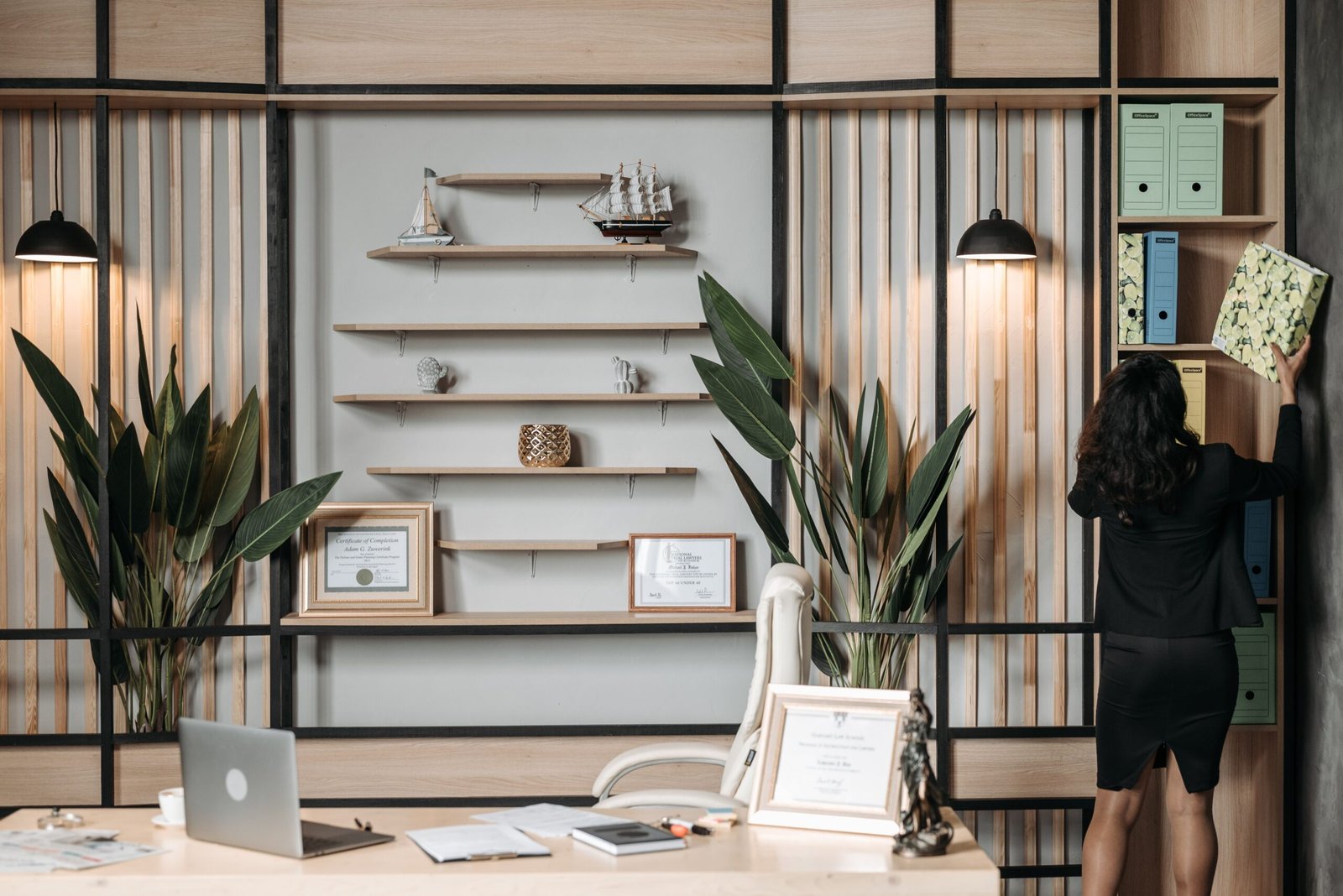
36. Install Shelves Above the Desk
Home office shelving ideas include shelves above the desk for books and lightweight supplies. Home Office Ideas Follow installation requirements for wall and load.
37. Use Vertical Storage to Free Up Floor Space
Tall shelving and wall organizers use wall space. Home Office Ideas Keep regularly used items at accessible heights and avoid filling every section.
38. Add a Pegboard for Everyday Supplies
Office pegboard ideas keep small tools and accessories visible and easy to rearrange, especially above a narrow desk.
39. Organize Papers in Wall-Mounted Pockets
Wall pockets sort mail, receipts, and projects when a desk has little drawer space. Review them regularly.
40. Choose a Desk With Hidden Storage
Concealed compartments keep supplies out of sight, which helps when the office shares a bedroom or living room.
41. Use Matching Storage Boxes
Matching boxes group similar items. Label them by purpose, and choose sizes that fit your shelves.
42. Add a Narrow Filing Cabinet
A slim filing cabinet holds documents without wide floor use. Measure the clearance needed to open drawers.
43. Keep Supplies in Decorative Baskets
Baskets collect chargers and stationery while complementing the room. Avoid baskets so deep that items get lost.
44. Use a Rolling Storage Cart
A rolling cart moves between rooms and parks beside the desk. Home Office Ideas Keep heavier items on lower shelves.
45. Install Cable Management Under the Desk
Under desk storage ideas include clips and trays that organize cables. Route cords away from chair wheels and avoid overloading outlets.
46. Use a Monitor Stand With Storage
A stand with a compartment creates room beneath the screen for a keyboard or notebook. Make sure it supports your monitor.
47. Create a Dedicated Charging Station
Choose one location for devices and cables. A small tray prevents chargers from spreading across the desk.
48. Display Frequently Used Items on Open Shelves
Open shelves keep regular supplies within reach. Home Office Ideas If they become a display for everything you own, choose closed storage.
Stylish Small Home Office Decorating Ideas
49. Choose a Light and Neutral Color Palette
White, cream, and soft gray help a workstation blend into its surroundings. Home Office Ideas Test paint in the room’s actual light.
50. Add a Bold Accent Wall
A home office accent wall in a saturated shade can distinguish a workspace within a shared room. Renters can use removable options.
51. Use Wallpaper to Define the Workspace
A small section of wallpaper behind the desk can separate a nook from the rest of the room. Check rental restrictions first.
52. Hang a Small Gallery Wall
A few prints or framed photographs add personality, Home Office Ideas and office wall decor ideas don’t take up desk space. Secure frames properly.
53. Add a Mirror to Reflect Light
A mirror reflects daylight and adds depth. Make sure it doesn’t reflect your monitor or create distractions on calls.
54. Choose Transparent or Visually Light Furniture
Slim legs and open frames look less bulky. Don’t sacrifice stability or surface area for a lighter look.
55. Introduce Natural Wood and Textured Materials
Wood, woven baskets, and fabric soften a workstation. Repeat materials already in the room for cohesion.
56. Decorate With Low-Maintenance Plants
A small plant adds color and texture. Pick one suited to your light and keep it away from electronics.
57. Add a Desk Lamp With a Decorative Finish
A lamp provides task lighting and style. Choose an adjustable design that avoids reflections on a screen.
58. Use a Rug to Define the Office Zone
Office rug ideas include a flat rug that marks a workspace in a larger room. Avoid raised edges that catch chair wheels.
59. Coordinate the Desk With Existing Furniture
Consistent materials or colors make a workstation in a living room or bedroom feel connected. Matching isn’t necessary.
60. Create a Clean, Minimalist Workstation
Minimalist office decor keeps essential equipment on the desk and stores the rest. It should support your routine, not remove tools you need.
61. Add Personal Artwork and Meaningful Accessories
A favorite print or keepsake makes an office personal. Choose a few items and leave room for work.
62. Use Curtains or Screens to Separate the Workspace
A curtain or folding screen creates a visual boundary, Home Office Ideas which is a simple home office room divider idea. It won’t necessarily block sound.
Lighting, Comfort, and Remote Work Functionality
63. Position the Desk to Make Use of Natural Light
Place the desk where daylight helps without causing glare. Use window coverings when needed.
64. Add Layered Lighting for Different Tasks
Combine room lighting with a task lamp for reading and detailed work. Avoid harsh shadows and reflections.
65. Choose a Supportive Chair That Fits the Room
A chair should fit the desk and allow comfortable movement. Home Office Ideas OSHA’s computer workstation guidance and Mayo Clinic’s office ergonomics advice offer general principles for seating and screen position.
66. Create a Neat and Professional Video-Call Background
Face the camera toward a tidy wall or organized shelving, light your face well, and keep private items out of view.
67. Make the Workspace Easy to Close Away at the End of the Day
A fold-down desk, cabinet, or storage box helps work materials disappear after hours. A repeatable closing routine helps the room return to its usual purpose.
How to Plan a Small Home Office That Works for You
The best arrangement depends on room dimensions, equipment, habits, and who shares the space. A laptop-only setup has different needs from one with two monitors, paperwork, and frequent video calls.
Measure first. Measure the desk area and allow room for the chair, drawers, and doors. Check wall construction before mounting furniture and locate outlets.
Prioritize comfort and equipment. List what you use daily. For regular work, choose suitable seating and screen placement before decor.
Choose storage by routine. Drawers conceal items, open shelves suit frequent supplies, and rolling carts add flexibility.
Manage light, glare, noise, and privacy. Consider when daylight enters and whether calls need quiet. Home Office Ideas A screen gives a visual boundary but not soundproofing.
Keep work and personal life visually separate. Closed storage, a divider, or storing the laptop after work makes a multipurpose room easier to use.
Quick Comparison
| Option | Best For | Key Benefit | Limitation |
| Floating desk | Very compact rooms | Preserves floor space | Limited storage |
| Fold-down desk | Multipurpose rooms | Folds away | Limited usable space when open |
| Corner desk | Unused corners | Uses an awkward area | Shape may restrict placement |
| Closet office | Shared rooms | Conceals equipment | Needs lighting and ventilation |
| Built-in desk | Alcoves and odd layouts | Efficient use of dimensions | Less flexible later |
Frequently Asked Questions About Home Office Ideas
How can I create a home office in a very small room?
Measure the area, identify essential equipment, and choose a desk that fits without obstructing movement. Add vertical storage, lighting, and a chair that suits the desk.
Where should I put a desk if I don’t have a spare room?
Consider a bedroom corner, a living room wall, a closet, a hallway alcove, or a guest room, based on space, light, and privacy.
How can I make a small home office look bigger?
Use visually light furniture, clear the desktop, and rely on vertical storage and good lighting.
What type of desk is best for a small home office?
Floating desks suit fixed workstations, fold-down desks suit multipurpose rooms, and corner desks suit awkward layouts.
How can I hide a home office when I’m not working?
Use a fold-down desk, secretary desk, concealed cabinet, curtain, or folding screen, and store loose equipment in containers.
Final Thoughts on Home Office Ideas
The most useful home office ideas start with the space you have and the work you need to do. Home Office Ideas A bedroom corner, a closet, or an unused wall can become a practical workstation when the furniture fits, storage is planned, and lighting supports your tasks.
You don’t need to recreate a large, dedicated office. Home Office Ideas Focus on comfortable seating, usable desk space, sensible equipment placement, and a storage system you can maintain. Home Office Ideas Then bring in colors, artwork, plants, or other details that suit your home.
Start with a suitable desk, comfortable seating, and practical storage, then add lighting and decorative details that make the workstation feel like a natural part of your home.